

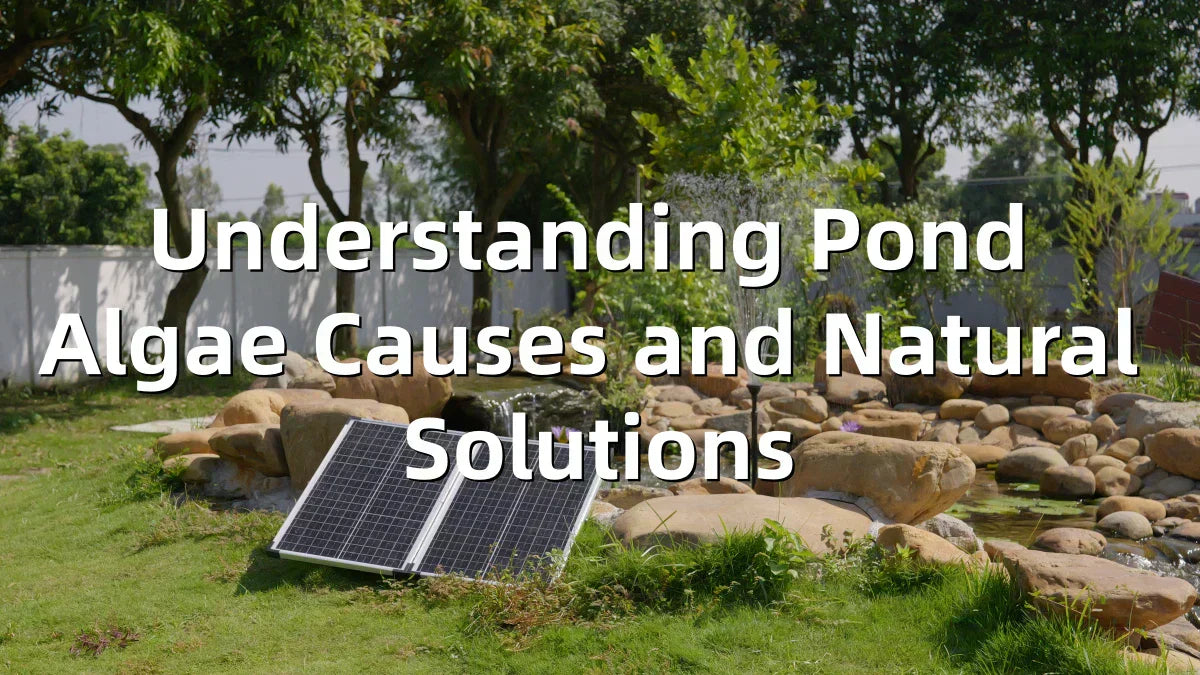
Effective pond algae control is about creating a balanced ecosystem rather than eliminating algae completely. The key natural methods include: 1) Adding aquatic plants to compete with algae for nutrients, 2) Improving water circulation with solar pumps to prevent stagnation, 3) Regular debris removal to reduce nutrient sources, 4) Balancing fish populations to control waste, and 5) Using beneficial bacteria to break down organic matter. Poposoap's solar-powered pumps and filtration systems support this natural balance by enhancing water movement and filtration without harsh chemicals, creating a sustainable solution for clear pond water.
If you've ever looked out at your pond and noticed a layer of green film or cloudy water, you're not alone. Algae are one of the most common challenges for pond owners. While a small amount is natural—and even beneficial—too much can turn your clear water into an uninviting green mess. Before reaching for chemicals, it's important to understand why algae form and how to restore balance naturally.

Effective pond algae management is not really about eliminating the algae completely. It's about creating a balanced environment where water flow, light, and plants all work together. Using natural resources like those offered by Poposoap, owners can have crystal clear water and thriving wildlife without the need for harsh chemicals.
Types of Algae
Algae are not all created equal. Knowing what you're dealing with helps you make the right choice in selecting the right natural algae treatment.
- Green Water (Planktonic Algae): The most common type, giving ponds a cloudy or pea-green color. It thrives best in hot, fertile, stagnant water.

- String Algae (Filamentous Algae): Forms long, hair-like filaments that cling to rocks, vegetation, and pumps. While not necessarily undesirable, it can overtake shallow areas rather quickly.

- Blue-Green Algae (Cyanobacteria): Technically a bacterium rather than an algae, and potentially toxic to fish, pets, and humans. It has a tendency to appear as a slimy surface sheen.

- Attached Algae: Green fuzz in short strings that forms on pond rocks and walls. Actually a good one—it shelters microorganisms and keeps ecosystem balance in place.

Poposoap's solar circulation pumps circulate the water gently, avoiding stressful algae growth by breaking up stagnant areas where blooms begin.
Algae Types & Natural Treatment Methods
| Algae Type | Characteristics | Natural Treatment | Poposoap Solution |
|---|---|---|---|
| Green Water | Cloudy, pea-green water | UV clarifiers, barley straw, beneficial bacteria | Solar pumps + filter boxes |
| String Algae | Hair-like filaments on surfaces | Manual removal, hydrogen peroxide dips, pond vacuums | Reusable filter media + circulation |
| Blue-Green Algae | Toxic, slimy surface sheen | Immediate removal, activated carbon, water changes | Enhanced filtration + aeration |
| Attached Algae | Beneficial green fuzz on surfaces | Leave alone, maintain balance | Natural ecosystem support |
What Causes Outbreaks
Algae bloom anywhere there is sunlight, water, and nutrients. Outbreaks happen when these elements get out of control.
- Too Many Nutrients: Landscaping fertilizer runoff, fish excrement, and decaying leaves spill nitrogen and phosphorus—algae's favorite meal ingredients.
- Still Water: When there are no currents to remove excess oxygen and distribute nutrients, algae grow rapidly.
- Too Much Sunlight: Direct, intense sun warms the water, speeding up algae growth.
- Not Enough Plant Coverage: Aquatic plants compete with algae for nutrients. With them absent, algae overgrow.
- Overstocked Fish: Too many fish create too much waste, which feeds the blooms.
Poposoap's product philosophy is one of nature balance—encouraging pond owners to treat causes, not symptoms. Poposoap's pumps and filter boxes enhance circulation and natural filtration, keeping ponds in balance year-round.
Natural Prevention Tips
Natural algae control starts with little, regular things that prevent conditions for overgrowth.
- Add Plants: Surface-dwelling plants like water lilies and hyacinths cover the surface, while underwater plants like hornwort can absorb nutrients. Poposoap's filters supplement plants to form a natural nutrient recycling cycle.
- Improve Water Movement: Solar pumps prevent stagnation while being environmentally friendly. Poposoap's solar fountains are perfect for maintaining oxygenation at zero energy cost.
- Clean Debris Regularly: Remove dead leaves and organic waste before they rot and provide nutrients.
- Feed Fish Sparingly: Excessive feeding produces more waste and nutrient accumulation.
- Balance Light and Shade: Shading helps avoid overheating and excessive light exposure.
- Introduce Beneficial Bacteria: These bacteria degrade organic waste prior to the algae's ability to feed on them.
By adhering to these standards, your pond will regulate itself naturally—lessening the need for artificial means.
Regional Algae Control Tips
Northeast & Midwest (USDA Zones 3-6)
- Seasonal Algae Cycles: Expect blooms in spring (April-June) and fall (September-October)
- Winter Preparation: Clean pond thoroughly before winter to prevent spring algae explosions
- Spring Startup: Install solar pumps early to establish circulation before algae takes hold
- Heavy Rainfall: Use additional filtration after heavy rains to capture runoff nutrients
South & Southeast (USDA Zones 7-9)
- Extended Growing Season: Algae can be problematic year-round, requiring consistent management
- Heat Management: Increase shade coverage to prevent excessive water warming
- Hurricane Season: Prepare for nutrient influx from heavy rains with additional filtration
- Native Plants: Use regional aquatic plants that thrive in your specific climate
West Coast & Southwest (USDA Zones 8-11)
- Drought Conditions: Maintain proper water levels to prevent nutrient concentration
- Intense Sunlight: Increase surface plant coverage to 50-60% of pond area
- Hard Water: Monitor mineral levels that can contribute to algae growth
- Water Conservation: Use recirculating solar systems to minimize water loss
When to Act vs. Wait
Not every alga must be addressed immediately. In fact, a little is a sign of a well-balanced pond. It's merely a matter of knowing when it's part of the process—and when it's overriding.
When to Wait:
- A green fuzz on plant stems or rocks, even a thin one, is fine. It's snail and fish food, and it maintains biological stability.
- Early spring bloom is normal as water warms up; those should resolve as plants start growing.
When to Act:
- If visibility drops below 30 cm (12 inches) due to green pond water, oxygen levels can drop and threaten fish and plants.
- If string algae smother plants or foul filters, the moment is right to act.
Poposoap's recommendations suggest coupling water circulation with filtration for long-term prevention. Their reusable filter media catch debris and improve clarity naturally, saving pond owners from the need to use reactive chemical treatments.
Monthly Algae Prevention Checklist
Weekly Tasks
- Remove floating debris and dead leaves
- Check and clean pump intake screens
- Trim overgrown aquatic plants
- Monitor water clarity (should see 12+ inches deep)
- Adjust solar panel position for optimal performance
Monthly Tasks
- Clean filter media in Poposoap filter boxes
- Test water parameters (pH, ammonia, nitrites)
- Add beneficial bacteria if needed
- Inspect pond edges for excess algae growth
- Check solar pump connections and performance
Myths About Algae
Pond algae management is too frequently marred by ignorance. Let's dispel a few myths:
- Myth 1: Algae-Free Water Is Ideal. Total removal is unfeasible and unwholesome. Some algae serve a purpose in oxygen balance and as a food source for aquatic life. Control, not eradication, is the goal.
- Myth 2: Chemical Algaecides Are the Only Solution. Temporary solutions, yes, but they kill beneficial bacteria and disturb pond ecosystems. Poposoap's eco philosophy promotes natural remedies—circulation, filtration, and vegetation—as safer, more sustainable solutions.
- Myth 3: Shade Alone Solves the Problem. Though shading is beneficial, a water movement deficit or overfeeding can create blooms as well. It is all about balance: light, plants, and oxygen play a role.
- Myth 4: Algae Mean a Dirty Pond. Clean ponds contain microscopic algae as well. A well-maintained pond's "green stage" following rain or temperature changes is natural and fleeting.
These busted myths encourage sustainable care over quick fixes for pond owners.
Poposoap's Eco Approach to Algae Control

Poposoap products are founded on the idea that waterscapes should enhance nature, rather than fight it. Their natural algae prevention strategy is prevention through design:
- Solar Pumps for Circulation: Provide water circulation to keep algae from accumulating in stagnant spots.
- Filter Boxes with Reusable Media: Trap organic debris while growing friendly bacteria.
- Eco-Friendly Materials: Built with weather-resistant, non-toxic materials that provide cover for fish and wildlife.
- Low-Maintenance Operation: Systems run themselves in sunlight—no electricity, no hand-held timers.
This approach ties in with the brand's mission: helping pond owners create sustainable, attractive environments that can live in harmony naturally.
Case Study: Texas Pond Transformation
Challenge: Persistent green water in a 1000-gallon backyard pond despite chemical treatments
Solution: Installed Poposoap 40W solar pump with filter box and added recommended aquatic plants
Result: Crystal clear water within 3 weeks, maintained without chemicals for over 6 months
Key Insight: The combination of solar-powered circulation and natural filtration created a balanced ecosystem that prevented algae overgrowth without harsh treatments
Final Thoughts
Algae are a natural element of every pond's ecosystem—but they don't have to take over. If you understand how they grow, catch signs of imbalance early, and employ natural algae treatment techniques, you can maintain your water clean and clear year-round.
Poposoap's solar-powered pumps, filters, and fountains make it easier than ever. Perfect for novices or experienced pond keepers, their systems mesh with nature in perfect harmony to provide ecological balance with minimal energy and effort output.
Pond ownership, choreographed in terms of movement, filtration, and biodiversity, is not only beautiful—it becomes self-sustaining. And with the world in transition toward environmental awareness, an eco-balanced pond is not only a backyard feature—it's an icon of harmony between nature and design.
So the next time you spot a streak of green on your pond's surface, remember: all algae aren't bad. With the right equipment and a bit of patience, your pond can be healthy, vibrant, and naturally clear—without the need for harsh chemicals.
Frequently Asked Questions
Is some algae good for my pond?
Yes, small amounts of algae are beneficial for your pond ecosystem. They produce oxygen through photosynthesis, provide food for fish and other aquatic life, and help maintain water quality by absorbing excess nutrients. The goal should be control, not complete elimination.
How long does it take to clear green pond water naturally?
With proper natural methods, you can typically see improvement in 1-2 weeks, with full clarity achieved in 3-6 weeks. The process depends on several factors including pond size, severity of the bloom, water temperature, and the effectiveness of your chosen natural treatments. Patience is key when using natural methods instead of chemicals.
Can solar pumps really help control algae?
Absolutely! Solar pumps are highly effective for algae control because they prevent water stagnation, which is a primary cause of algae blooms. By keeping water moving, they distribute oxygen more evenly, prevent nutrient buildup in one area, and create an environment less favorable for algae growth. Poposoap's solar pumps provide consistent circulation without the need for electricity.
What plants are best for natural algae control?
The best plants for natural algae control include: 1) Floating plants like water lilies and water hyacinths that provide shade and absorb nutrients, 2) Submerged plants like hornwort and anacharis that oxygenate water and compete with algae, and 3) Marginal plants like cattails and irises that filter runoff. Aim for 40-60% plant coverage for optimal algae control.
How often should I clean my pond filter?
For optimal algae control, clean your Poposoap filter box every 2-4 weeks during the growing season. If you notice reduced water flow or your pond starting to cloud, clean it immediately. Regular cleaning prevents debris buildup and ensures beneficial bacteria can thrive. During winter, cleaning frequency can be reduced to once every 1-2 months.
Are there natural ways to remove string algae?
Yes, effective natural methods for string algae include: 1) Manual removal using a pond rake or net, 2) Adding barley straw extract which releases natural compounds that inhibit algae growth, 3) Introducing algae-eating creatures like pond snails or certain fish species, and 4) Improving water circulation with solar pumps to prevent stagnant areas where string algae thrives.


Leave a comment
All comments are moderated before being published.
This site is protected by hCaptcha and the hCaptcha Privacy Policy and Terms of Service apply.