

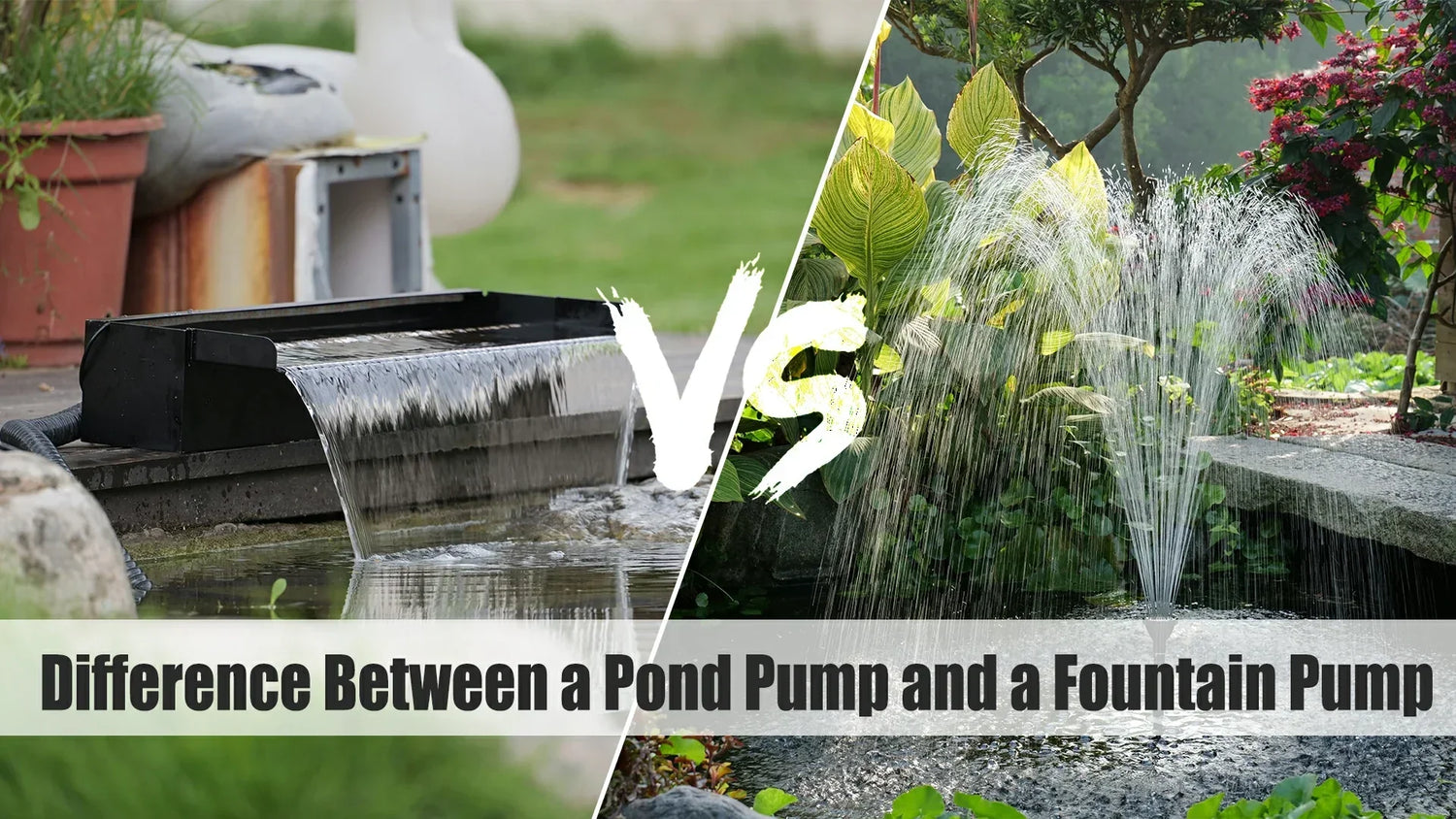
When you’re planning a water feature — whether it’s a tranquil pond filled with fish or an elegant garden fountain — one of the first questions that comes up is: what’s the difference between a pond pump and a fountain pump?
At first glance, they may look similar. Both circulate water, both sit underwater, and both bring movement and life to your garden. But their functions are quite different. Choosing the right one affects how your water looks, how clean it stays, and how much maintenance you’ll need.
Let's take a closer look at how they work, how they are different, and how Poposoap's solar-powered pumping systems combine efficiency with design to make pond care easy, all for free with the sun.
Introduction – Why Selection of the Proper Pump Is Important
A water feature is only as good as its pump. The pump determines water flow, clarity, and oxygen content. An improper type of pump can lead to anemic water circulation, algae development, or even motor failure.
Pond pumps are meant for all-around circulation to create a living habitat. Fountain pumps are meant for water spectacle — creating jets, sprays, and bubbling action. Having an idea of what you want will save time, dollars, and elbow grease in the long run.
Learning the Basics – What Each Pump Does
Let us learn how each pump operates before we are able to compare them.

- Pond Pump: Its main job is to pump water regularly. It carries large volumes of water at low speeds, which oxygenates the pond, prevents stagnation, and feeds a filtration unit. This maintains microbes, plants, and fish healthy.
- Fountain Pump: A fountain pump is applied for height and aesthetics. It's employed to push water through fine tips to create bubbling action, cascades, or sprays. It's designed to be visually appealing, not for biological balance.
Both create motion — but they are built for quite different functions.
Pond Pump vs. Fountain Pump – The Main Differences
The most significant difference between a pond pump and a fountain pump is in power, pressure, and purpose.
1. Purpose and Type of Flow
- Pond Pump: Designed for continuous, low-pressure flow to maintain water health.
- Fountain Pump: Generates more pressure to create creative water effects.
2. Water Movement
A pond pump forces a lot of water softly — ideal for feeding a waterfall or a filter box. A fountain pump blows less water but with more force in the upward direction for a flashy look.
3. Filtration and Oxygenation
Pond pumps usually supply water to filters and aeration kits. For instance, Poposoap solar pond pumps contain a filter box which captures dirt and is subject to biological filtration. Fountain pumps are mostly stand-alone — they pump but don't filter water.
4. Energy Consumption and Durability
Since pond pumps operate 24/7, they are designed to be efficient and long-lasting. Fountain pumps require a minor power boost but are operated less continuously. Poposoap solar pumps address both concerns — operating on clean solar energy; therefore, constant running comes at no expense.
5. Requirements for Maintenance
Pond pumps require filters to be cleared out every few weeks, whereas fountain pumps primarily require rinsing of nozzles to avoid clogging.
6. Aesthetic vs. Ecological Function
- Fountain Pump: Emphasis on appearance and sound.
- Pond Pump: Focus on water quality and circulation for living organisms.
If your pond has fish or plants, a pond pump is essential. If you’re after visual charm or sound, choose a fountain pump — or combine both for function and beauty.
How About Pool Pumps? (Bonus Comparison)

It’s also common to confuse pond and fountain pumps with pool pumps, but they are entirely different in design.
- Pool Pumps: To withstand high water pressure and intense circulation by a chlorinated filter mechanism.
- Pond Pumps: Soft and wildlife-safe; they are applied with untreated or natural water.
The difference between a pond pump versus a pool pump is significant: the force of a pool pump would shatter the balance of a small pond, while a pond pump would be too weak to deal with the amount of water in a pool or its filtering force.
Selecting the Right Pump for Your Water Feature
Here's a quick rundown on how to pick the right one for you:
- For koi ponds or natural ponds: Add a pond pump with a filtration system to provide continuous oxygenation. Poposoap solar pond pumps are a great off-grid choice for healthy, clean water.
- For decorative fountains or bird baths: Add a fountain pump to provide spray and beauty. Poposoap solar fountain kits come with adjustable nozzles that produce different water patterns.
- For multi-purpose water features: Combine the two — a water quality pond pump and a small fountain pump for surface display.

Tip: Always consider flow rate and lift height. Your pond's entire water volume should be circulated at least once every one to two hours.
Installation and Care Instructions
For optimum use of your pump system:
- Place the pump on a solid, level base below the water.
- Submerge the pump fully to avoid overheating.
- Clean nozzles or filters regularly so water can flow freely.
- Solar models (solar panels) need to be placed in the sun for at least 5–6 hours a day.
- Winterize the pump and store indoors if the pond freezes.
The product guide of Poposoap includes simple step-by-step installation and seasonal maintenance procedures to help you obtain long-term performance.
Frequently Asked Questions about Pond Pumps and Fountain Pumps
Q1: Can I use a fountain pump in a pond?
Yes, but it won't provide adequate filtration or oxygenation. It's for decoration only.
Q2: Can a pond pump be used to drive a fountain?
Yes — if it can be fitted with the right lift height and pressure, it can be fitted with a spray nozzle for surface effects.
Q3: What's the optimal power solution for outdoor pumps?
Solar energy. Poposoap's solar-powered configurations deliver quiet, clean, and free operation.
Q4: Can a pond pump be used in a swimming pool?
No. Pool pumps are designed for chlorinated water and high flow pressure, while pond pumps thrive in natural water.
Q5: Which one lasts longer?
A pond pump usually lasts longer since it's meant to operate all day, particularly brushless solar types such as Poposoap's.
Conclusion – Functionality vs. Aesthetics
In brief, when comparing a fountain pump vs. a pond pump, consider your objective:
- If you desire a balanced, healthy ecosystem, opt for a pond pump.
- If beauty and movement is your aim, use a fountain pump.
- And if you want both, combine them for the best of both worlds.
Poposoap simplifies doing all of the above. Using durable solar pumps, efficient filtration systems, and fashionable fountain kits, you can drive your garden or pond feature naturally — simply by the sun.



Leave a comment
All comments are moderated before being published.
This site is protected by hCaptcha and the hCaptcha Privacy Policy and Terms of Service apply.