

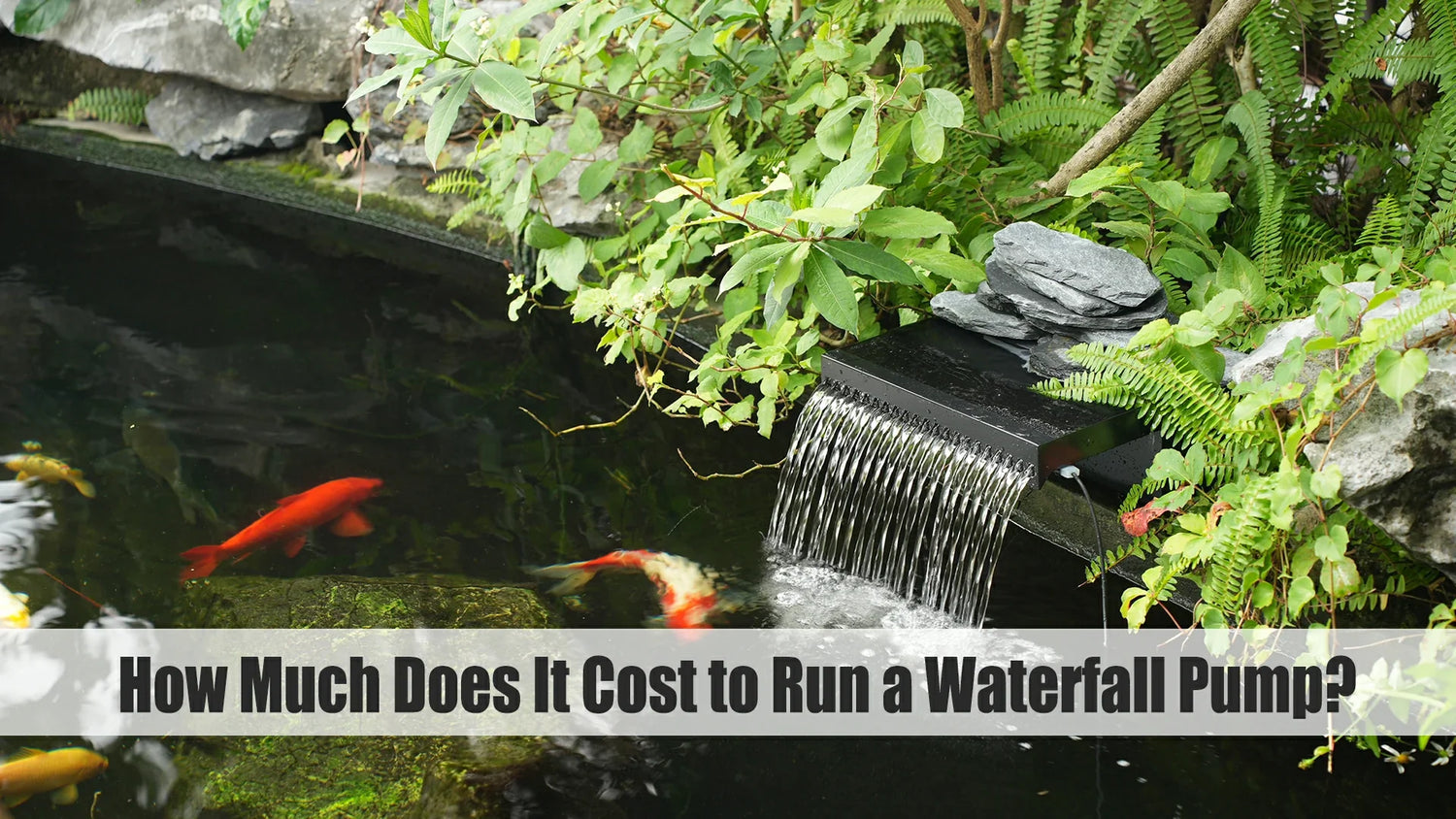
Nothing quite beats the sweet sound of a waterfall in your backyard-that steady, soothing flow of water can make even modestly sized gardens a tranquil retreat. One thing that always seems to give new pond owners pause: just how much does it cost to run a waterfall pump?
That is a valid concern. Normally, a waterfall pump would run continuously to keep the water circulating and well oxygenated. Precisely for this reason, understanding its energy cost-and how to reduce it-may make quite a big difference in your monthly bills. This guide will explain how to calculate pump costs, which factors may affect energy use, and why the solar-powered waterfall pumps from Poposoap quickly became a cost-efficient and sustainable solution for modern garden owners.
Understanding the Cost of Running a Waterfall Pump

Every arrangement of a waterfall and a pond needs a pump that keeps the water in circulation. This prevents the water from becoming stagnant, helps in filtration processes, and keeps your water feature alive. However, the cost of operating a waterfall pump relies on three major factors:
- Pump wattage (power draw)
- Electricity rates in your area
- How many hours per day you run the pump
For example, based on the 2026 national average residential electricity rate of 18.02¢ per kilowatt-hour (kWh). A 200-watt electric pump running 24 hours a day costs roughly $25.92 a month. Multiply that over seasons, and the total can easily exceed $311 a year —Accept Dismiss only for energy.
Probably for this reason, more and more homeowners are now shifting to solar models-for example, the solar pond and waterfall pumps offered by Poposoap-operating on clean sunlight instead of power supplied by the grid.
Electricity Rates by State (January 2026)
| State | Average Electricity Cost (¢) | State | Average Electricity Cost (¢) |
|---|---|---|---|
| Alabama | 16.23 | Alaska | 24.88 |
| Arizona | 15.59 | Arkansas | 12.54 |
| California | 30.63 | Colorado | 15.55 |
| Connecticut | 30.52 | Delaware | 16.91 |
| District of Columbia | 18.71 | Florida | 14.75 |
| Georgia | 14.98 | Hawaii | 41.84 |
| Idaho | 11.71 | Illinois | 16.18 |
| Indiana | 15.62 | Iowa | 13.06 |
| Kansas | 14.38 | Kentucky | 13.06 |
| Louisiana | 12.19 | Maine | 26.44 |
| Maryland | 18.61 | Massachusetts | 26.61 |
| Michigan | 19.59 | Minnesota | 15.94 |
| Mississippi | 13.67 | Missouri | 13.16 |
| Montana | 12.89 | Nebraska | 12.03 |
| Nevada | 13.61 | New Hampshire | 22.93 |
| New Jersey | 21.14 | New Mexico | 14.97 |
| New York | 23.30 | North Carolina | 14.03 |
| North Dakota | 11.75 | Ohio | 16.51 |
| Oklahoma | 12.75 | Oregon | 14.77 |
| Pennsylvania | 17.44 | Rhode Island | 28.08 |
| South Carolina | 14.63 | South Dakota | 13.16 |
| Tennessee | 13.12 | Texas | 15.66 |
| Utah | 12.34 | Vermont | 22.32 |
| Virginia | 14.92 | Washington | 12.51 |
| West Virginia | 15.38 | Wisconsin | 17.01 |
| Wyoming | 13.83 |
Source: poweroutage.us
How to Calculate the Cost to Run a Waterfall Pump
A simple formula to help you estimate:
(Pump watts ÷ 1,000) × hours per day × electricity rate = daily cost
Then multiply by 30 to get the monthly estimate.
Let's break that down with a real example:
- Pump Wattage: 150 watts
- Runtime: 24/7
- Electricity cost: $0.15/kWh
(150 ÷ 1,000) × 24 × 0.15 = $0.54 per day
That is about $16.20 a month, or close to $200 per year.
This is for a modest mid-size waterfall pump. Larger systems can be much more expensive to operate, especially in the heat of summer when pumps run constantly.
| Pump Size | Wattage | Est. Monthly Cost | Est. Yearly Cost |
|---|---|---|---|
| Small (Desktop/Pondless) | 5W – 25W | $0.65 – $3.25 | $8 – $39 |
| Medium (Backyard Pond) | 50W – 150W | $6.50 – $19.50 | $79 – $237 |
| Large (Laminar/High Flow) | 300W – 750W | $39.00 – $97.50 | $474 – $1,186 |
| Professional (1 HP) | ~1,000W | $130.00+ | $1,580+ |
The Factors That Affect Running Cost
Various factors determine the cost of operating a waterfall pump:
- Pump size and efficiency: Higher wattage pumps consume more energy. Modern brushless DC pumps, like Poposoap's, are designed for efficiency and can cut power use by up to 50%.
- Water lift height: The higher your waterfall, or longer the hose, the harder your pump is working and the more it draws energy.
- Flow rate: A high flow rate of water has an appealing appearance; however, it consumes a lot of energy. It is prudent to balance the aesthetic appeal of the shower with the consumption of energy to save on cost in the long run.
- Filter resistance: The pump has to work harder because of dirty or clogged filters. Filtering regularly keeps the costs down.
- Operation time: While many ponds operate 24/7, seasonal or timed operation can dramatically reduce energy use.
Understanding these factors allows you to tune performance without losing that soothing waterfall sound.
How to Decrease the Costs of Operating a Waterfall Pump
Even if you prefer an electric pump, it is quite easy to cut costs:
- Choose energy-efficient models with either brushless DC or variable-speed designs.
- Clean filters and intakes regularly. A clean pump operates cooler and consumes less energy.
- Use a timer. Switch off the pump at night if fish and plants don’t depend on constant circulation.
- Smaller tubing. The longer the travel of water, the larger the demand for energy.
- Switch to solar. Modern solar pumps, like those by Poposoap, eliminate power bills altogether.
Electric vs Solar Waterfall Pumps: Cost Comparison

Electric Waterfall Pumps
- Require uninterruptible grid electricity
- Strong performance but high long-term cost
- Average operating cost: $150–$300 per year (depending on wattage and rates)
Solar Waterfall Pumps
- Fully powered by the sun; no monthly bills.
- May include battery backup to allow cloudy day or nighttime operation
- Zero operating cost after installation
- Eco-friendly and low maintenance
In fact, solar pumps are more than powerful enough for most small to medium garden ponds or decorative waterfalls. Poposoap solar waterfall pumps use high-efficiency monocrystalline panels with more energy conversion rates to drive water flow reliably, even in partial sunlight, using a brushless motor.
While large, commercial-grade installations may still be customarily fitted out with electric pumps, solar pumps prevail in residential landscapes where sustainability, simplicity, and cost savings are in the fore.
Other Costs to Consider
Beyond energy consumption, factor in:
- Initial pump purchase: Quality pumps are more expensive to buy upfront but last longer.
- Maintenance: cleaning and replacing filters or impellers.
- Replacement frequency: Cheap pumps burn out faster. Poposoap's pumps utilize hard-wearing materials and corrosion-resistant components, therefore living longer.
- Battery replacements can be done every 2–3 years in solar models, considering usage and weather conditions.
Long-term, a solar set-up generally pays for itself in 12 to 18 months through energy savings alone.
How Long Can One Waterfall Pump Run Continuously?
In fact, a well-cared-for waterfall pump can be run 24/7 with no problem for a number of years. Many pond owners keep their pumps on during the entire year to maintain water quality. It's perfectly safe to operate them continuously, as long as they stay submerged, properly cleaned, and well-ventilated.
Pumps from the likes of Poposoap are designed for endurance, using brushless DC motors that reduce friction and heat. The result of such design is longer life but also quieter running to create that garden atmosphere.
When a Solar Waterfall Pump Makes More Sense

Solar power is a practical choice when it comes to switching to
- Your pond or waterfall is far from an electrical outlet
- You want to eliminate monthly energy bills.
- You live in a sunny or mild climate
- You prefer an environmentally friendly solution
For such situations, Poposoap presents the best plug-and-play solar waterfall and pond pumps. Their panels charge under partial sunlight, while built-in battery options keep the water flowing through the evening. The plug-and-play design translates to ease of setup, with no wiring, electrician, or stress needed.
Conclusion: Beautiful Waterfalls Don't Have to Be Expensive
Operating a waterfall pump does not have to break the bank. With a little knowledge about your energy usage and the options out there, you can enjoy the soothing sound of running water without feeling there are hidden costs lurking anywhere.
Tired of rising electricity bills? Go solar! With Poposoap's Solar Waterfall and Pond Pumps, you get the same beauty and movement, all entirely powered by sunlight-no cords, no wiring, zero operating costs.
This is the most straightforward and sustainable way to bring energy and life into your garden waterfall in a strikingly beautiful way at an affordable cost.
Want to learn more about Total Costs for a Solar Water Pump? Click [here] to read more.

70W 580GPH Solar Waterfall Pump Kit with 12"x13.4" Spillway
$269.99
Create a beautiful solar waterfall with this 70W kit. Includes a 12"x13.4" metal spillway and 40W 580GPH pump for eco-friendly backyard pond designs.
FAQs — Cost to Run a Waterfall Pump
It varies. In this case, a small solar pump costs somewhere from $60 to $150, and large electric pumps range from $200 to over $1,000 in price, depending on power and brand.
For electric models, usually from $10 to $25 monthly; for solar pumps, once installed, they cost absolutely nothing.
Yes, unless your pond needs to be constantly aerated. A timer can be used to save some energy.
The pump usually lasts 3–5 years, the panel about 10+ years or more with regular care.
Yes — at a reduced output. Those with a battery backup, such as Poposoap versions, can sustain a more consistent flow in low light conditions.


Leave a comment
All comments are moderated before being published.
This site is protected by hCaptcha and the hCaptcha Privacy Policy and Terms of Service apply.