

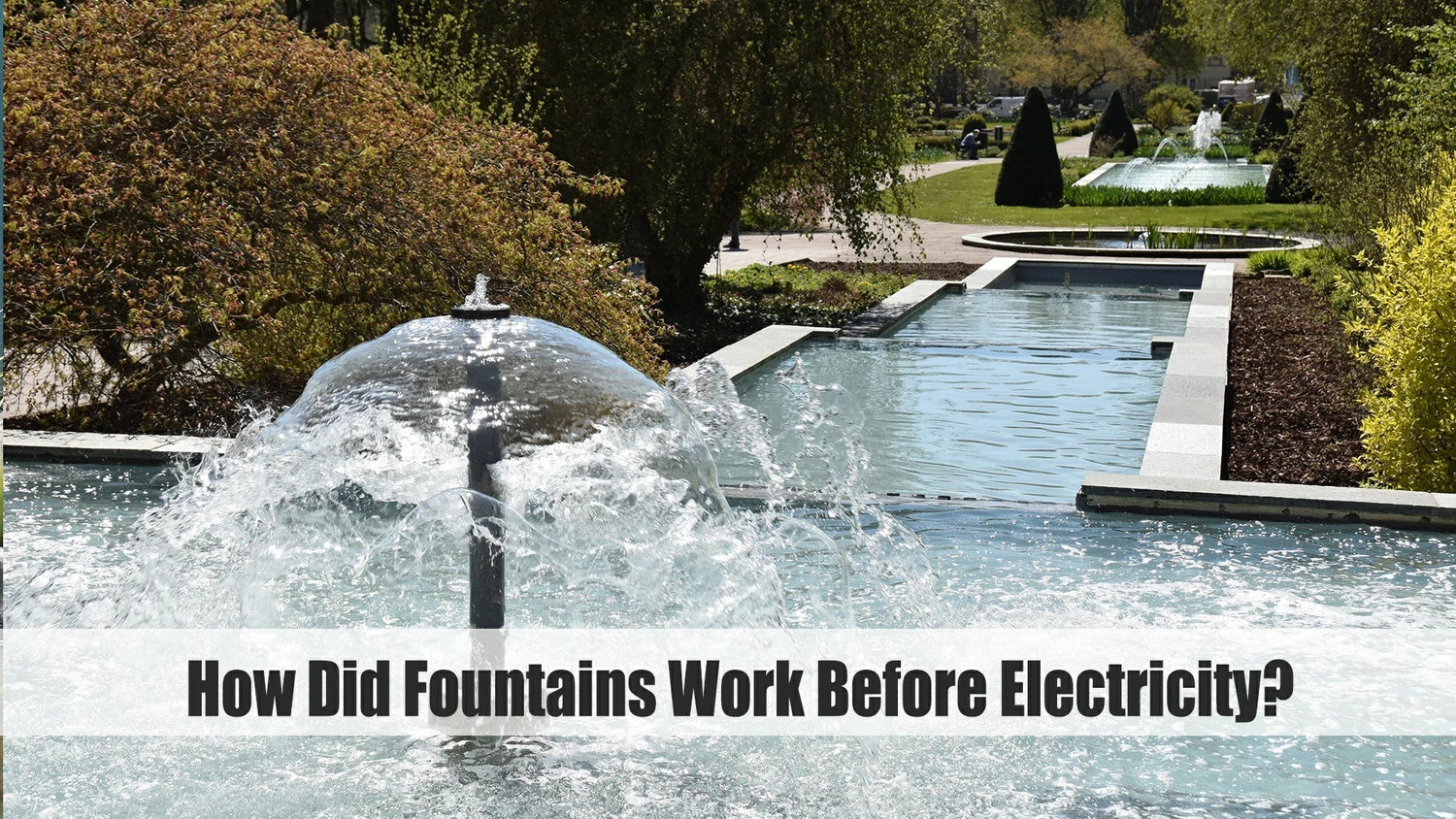
Before the hum of electric pumps and the quiet efficiency of solar panels, fountains still danced, splashed, and inspired. From Roman villas to Moorish courtyards, people centuries ago managed to move water elegantly — without wires, motors, or electricity. So, how did fountains work before electricity?
The reason is in the genius of early engineering-a combination of physics, gravity, and ingenuity that influences how we build fountains to this day. Let's find out how ancient civilizations did it and why modern eco-friendly brands like Poposoap are bringing in that very same spirit of sustainable water flow, with the power of solar technology.
A Brief History of Fountains Before Electricity
The first fountains were a status symbol: signs of wealth, purity, and life. Thousands of years before mechanical pumps were invented, ancient Egyptians, Greeks, and Romans built water features in temples, palaces, and gardens-not only for aesthetic appeal but also as signs of prosperity.
Early fountains relied wholly on gravity. Cities like Rome perfected this by having enormous aqueduct systems to bring in water from hundreds of miles away in hills. Using height and pressure, when the water reached urban centers, engineers were able to create magnificent fountains, ones as grand as the Trevi Fountain, without one watt of electricity.
It wasn't until the Middle Ages, however, that Islamic engineers in Spain and Persia really perfected the art of water features, designing symmetrically corresponding pools and cascades using simple hydraulics and geometric precision at places such as the Alhambra.
How Did Fountains Work Before Pumps or Electricity?
How did fountains work without electricity? The key was gravity.
Ancient fountains operated on hydraulic pressure based on differences in height. The principle is as follows:
- An elevated water source - either a hill, spring, or cistern - was built above the original fountain's level.
- Pipes or clay channels carried the water downward.
- The pressure naturally developed as the water was pulled through by gravity.
- The water coming out of the spout would be either a jet or a gentle flow, forming the fountain itself.
The greater the height difference between source and fountain, the higher the spray. The Romans controlled such pressure with precision and designed systems that were reliable for centuries.

This idea of not using any mechanical force but instead natural energy for the working of fountains is taken as the very basis for modern solar-powered fountains, such as in the Poposoap series. They are independent from grid electricity and get their power directly from sunlight-much as ancient engineers harnessed gravity.
Famous Examples of Pre-Electric Fountains
The major waterworks of ancient history were constructed without pumps or power:
- The Trevi Fountain, Rome, Italy: Completed in 1762, still uses ancient aqueducts carrying water by gravity.

- Villa d'Este, Tivoli, Italy: Consists of over 500 jets that are powered solely by the hydraulic pressure from surrounding springs.

- Alhambra, Granada, Spain: Its perfectly sloped sites with underground channels balance the flow and pressure in such an impeccable manner.

- The Gardens of Versailles - France: In the 17th century, engineers built reservoirs uphill with gravity-fed pipes that powered fountains.

These timeless fountains represented a triumph of engineering as much as artistry, proof that great design does not need electricity but only the clever use of natural forces.
The Science Behind Non-Electric Fountains
Essentially, learning how water fountains work without using any electricity relies essentially on two scientific principles:
- Gravity: Water always flows downhill, thus creating natural pressure.
- Hydraulic Head: The strength of flow, or how powerful the water flows in a fountain, depends on the difference in height between the hydraulic source and the outlet.
The same principle is applied in today's plumbing and irrigation systems, except that today the pumps substitute for the gravitational force, if a natural height difference is not available.
Other historic systems used siphons, wherein atmospheric pressure allowed water to flow uphill for short periods, before gravity reasserted itself. Ingeniously simple, yet effective.
Transition to Modern Pump-Driven Fountains
The Industrial Revolution of the 19th century brought mechanical pumps, first powered by steam then by electricity. These inventions freed the designer from relying on natural elevation. Fountains could now be built anywhere — even indoors or on flat ground.
| Feature | Historical (pre-1900s) | Modern (Post-1900s) |
|---|---|---|
| Primary Power Source | Gravity and natural elevation. | Modern submersible or centrifugal pumps. |
| Water Usage | Continuous Flow: Water was usually not recycled; it flowed into sewers or was used for irrigation/washing after passing through the fountain. | Recirculation: Water is continuously recycled from a hidden basin back to the top of the fountain. |
| Height Control | Limited by the elevation of the water source or reservoir. | Controlled by adjustable motor speed and pump horsepower. |
| Reliability | Consistent as long as the water source remained full. | Dependent on the electrical grid and motor maintenance. |
| Environmental Impact | Minimal (no carbon footprint), but potentially wasteful of fresh water. | High (requires electricity), but efficient in water usage through recycling. |
Comparison: Historical vs. Modern Fountains
Most of the decorative fountains today are supported by electric or solar pumps that pump out water continuously. These models differ from the early systems in that they recycle the same water usually through a closed loop, and they do not require a large reservoir. For example, Poposoap combines solar-powered pumps with efficient filtration boxes. The water circulates gracefully in their systems while staying energy-independent-a modern echo of ancient sustainability.

Why Understanding Ancient Fountain Engineering Still Matters
The ancients taught us that the most elegant solutions often come from working with nature, not against it. That's the same philosophy behind Poposoap's solar fountains. Instead of burning electricity, these fountains rely on sunlight-an endless, renewable source of energy-to bring water to life.
Combining the simplicity of a natural flow with modern technology, Poposoap follows the tradition of sustainable design: clean, quiet, and eco-conscious.
Understanding the origins of fountain engineering also deepens our appreciation for water's role in history-as a source of beauty, balance, and renewal.
Conclusion - From Ancient Gravity to Modern Sunlight
Before electricity, fountains had been powered by nature-the steady pull of gravity and the human genius that shaped it into art. Today, solar energy has taken its place as the clean, sustainable force driving the fountains of the future.
From the aqueducts of Rome to the solar panels of Poposoap, there is a principle that remains unchanged: true beauty flows best when powered by nature.

50W 360GPH Solar Water Fountain Pump
$149.99
Bring life to your pond or garden with this large 50W solar fountain pump. 360GPH flow, eco-friendly, perfect for outdoor ponds, bird baths, and water features.
FAQs — How Fountains Worked Before Electricity
Gravity-fed systems were employed wherein water at an elevation higher than the fountain flowed through piping and gained pressure to push the water upwards.
Yes, but the height of spray was dependent on the vertical drop between the water source and the fountain's outlet. The greater the drop, the stronger the flow.
Natural forces include primarily gravity and atmospheric pressure.
Absolutely. Many fountains in Rome, Granada, and Versailles still operate on their original gravity-fed designs.
Solar fountains, like Poposoap's, running on renewable energy (sunlight) rather than grid electricity-just like old fountains ran on renewable gravitational force.

Leave a comment
All comments are moderated before being published.
This site is protected by hCaptcha and the hCaptcha Privacy Policy and Terms of Service apply.