

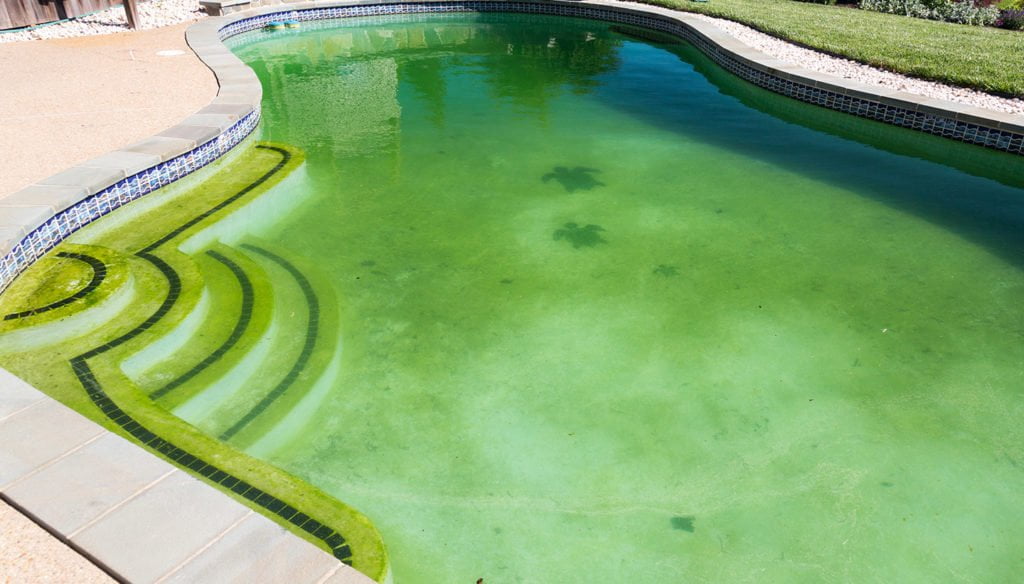
Water quality deterioration often occurs during high-temperature seasons or continuous rainy periods. This is mainly caused by the fermentation and decomposition of organic matter. It can also result from the excessive reproduction of aquatic plants.
Signs and Causes of Water Deterioration
(1) Water Color is Dark Brown and Murky

A dark brown and murky water color indicates excessive organic matter and rapid decomposition. This type of water is often acidic. That can harm the reproduction of natural feed and the growth of fish.
(2) Greenish Oil Foam or Particulate Matter on the Water Surface

Greenish oily foam or particulate matter on the water surface often appears when blue-green algae reproduce rapidly. In most cases, this issue is linked to a large-scale bloom. Most blue-green algae cannot be used as feed by fish. Instead, they consume nutrients, deteriorate water quality, and inhibit the reproduction of digestible algae. This can ultimately affect fish growth.
(3) Film on the Water Surface

A film can form on the water surface when dead organisms decay and release fatty substances. These fatty residues adhere to dust or waste, forming a visible film. This film is often gray-black and can hinder digestion if ingested by fish. It can also reduce oxygen dissolution in the water.
(4) Bubbles Floating on the Surface and Changes in Water Color
Frequent bubbles floating on the surface can be a sign of gas buildup. A gradual change in water color with a bitter, fishy smell can indicate the same issue. These gases, including carbon dioxide, hydrogen sulfide, ammonia nitrogen, and methane, are produced as organic matter decomposes. These gases are toxic and pose a threat to aquatic animals.
Solutions to Water Deterioration
Different measures should be taken based on the specific situation:
- The best approach is generally to add or change water.
- Increase aeration by using aerators to dissipate harmful substances (gases) in the water, promoting a balanced environment.
- Using photosynthetic bacteria and other microbial strains can help adjust water quality, improve sediment, and detoxify the water.
- For acidic waters, spreading quicklime can neutralize the acidity, promoting a weakly alkaline environment.
- Applying fertilizer appropriately based on water quality can make pond water more fertile and lively. This helps create suitable living conditions for fish and their feed organisms.
Characteristics of Good Water Quality: Fertile, Active, Tender, and Refreshing
The terms fertile, active, tender, and refreshing summarize good water quality and color. They come from long-term production practices. "Fertile" water refers to a high diversity and abundance of planktonic organisms. Water that appears green bean–colored or light brown with green tones can be described as “tender and refreshing.” It should have adequate fertility without being turbid. This combination indicates good overall water quality.
Good water quality often shows natural variation in color. This happens because different types of plankton become active as external conditions like light and temperature change. This can create noticeable color shifts. For example, it may look lighter in the morning and darker in the evening. In sunlight, it may also produce a cloud-like reflection, which is known as “active.”
Three Types of Good Water Quality

Water quality can be judged by its color. The following three types of water quality can be considered good:
Green Bean Color: Dominated by green algae, cryptomonads, and diatoms, with transparency of about 25-30 cm.
Light Brown with Green Tones: High transparency usually indicates a pond dominated by diatoms. It may also contain small amounts of green, golden, and yellow-green algae.
Oil Green Color: Dominated by cryptomonads, diatoms, some golden algae, and a portion of green algae. When cryptomonads and green algae are particularly abundant, the transparency may be lower.
In these three water colors, there are no floating bubbles or films on the water surface during hot weather.
(READ MORE: Effective Pond Algae Control: Tips and Solutions)

P3203 20W 280GPH Solar Pond Filter Fountain
$139.99
Clean and oxygenate your pond with this 20W solar pond filter pump. Eco-friendly 280GPH flow ideal for small to medium backyard water features.


Leave a comment
All comments are moderated before being published.
This site is protected by hCaptcha and the hCaptcha Privacy Policy and Terms of Service apply.