

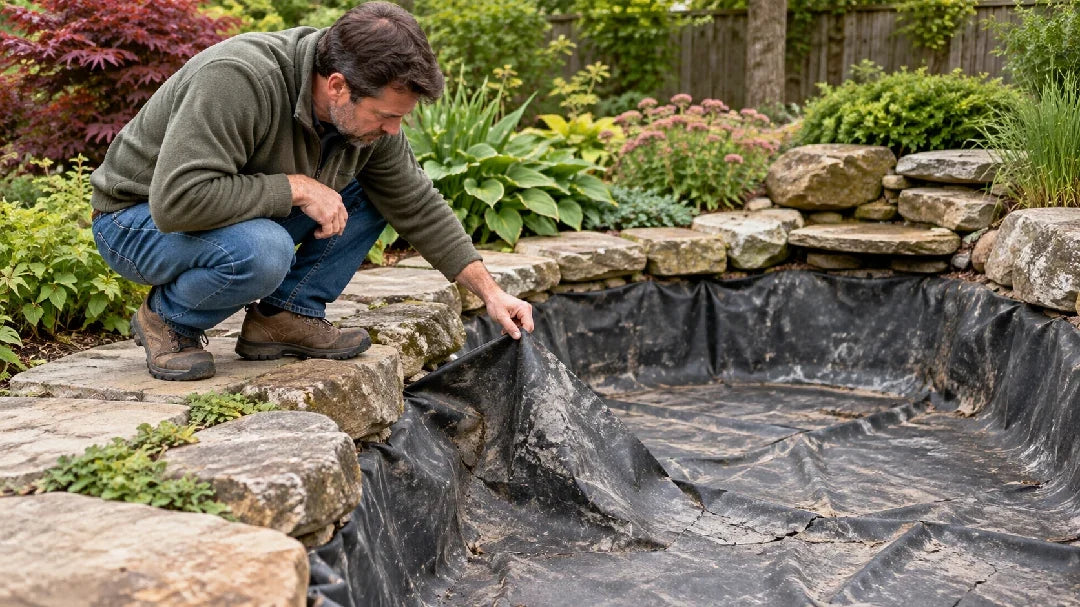
Many pond owners face issues related to their pond liner once they notice leaks and water loss. The temptation to use a simpler and seemingly cheaper pond liner replacement technique is quite common.
Placing a new liner over an old liner can lead to future problems. The old liner can have cracks, wrinkles, and debris underneath it, which will negatively affect the new liner.
Before you decide to replace the pond liner, it is essential to take some time to find out more about the lifespan of a liner and other important facts.
How Long Does a Pond Liner Last?
A pond liner can last a long time if installed and maintained correctly. However, it is necessary to understand what exactly determines the life expectancy of this product.
In general, a high-quality pond liner (an EPDM rubber liner, in particular) can work for 20 to 30 years or even longer. PVC liners have a shorter lifespan as they become harder over time.
However, the actual longevity of the pond liner depends on many factors.
What Makes a Pond Liner Less Durable?
Some things can significantly reduce the longevity of your liner.
UV Exposure
Prolonged UV exposure causes aging of the liner.
As a result, the liner can become:
- Dry
- Less flexible
- Easier to crack
Rocks, plants, and proper edging can protect exposed areas.
Physical Damage
Physical damage causes the majority of liner problems.
The most frequent causes of physical damage are:
- Sharp rocks inside the pond
- Growing tree roots
- Animal activity
- Problems during installation
- Putting objects that are too heavy on the liner
A single puncture can become a major leak over time.
Poor Water Conditions
The condition of water inside the pond can affect the performance of the liner.
Sediment, leaves, and organic matter can accumulate inside the pond and exert additional pressure on some parts of the liner.
Good water circulation and filtration can improve the situation and prevent organic matter buildup.
Why You Shouldn't Install a Pond Liner Over an Old Pond Liner
Installing a new liner over the old liner is not recommended because it does not solve the problems with the old liner.
Although the new liner prevents water loss, hidden damage underneath continues to affect the liner.

Hidden Damage Can Persist
The old liner can have problems that are difficult to identify.
These include:
- Small leaks
- Weak areas
- Cracks
- Places that have been stretched due to water pressure
If the old liner is damaged, placing a new liner over it only hides this problem.
The hidden damage can affect the new liner in the future.
The Debris Underneath Can Harm the New Liner
Debris such as dirt, stones, roots, and sediment usually accumulates underneath or around the old liner.
When a second liner is placed on top of the old one, it creates pressure points where sharp objects can harm the new liner.
That is one of the reasons why putting another liner layer over the old one is a risky decision.
It Can Make Repairing the Pond Liner More Complicated
A pond with multiple liners is harder to repair.
If there is another leak, locating its cause becomes harder as there are several layers to investigate.
Removing the old liner allows you to check the condition of the pond base and fix the problems before installing the new liner.
Water Issues Can Persist
A new liner cannot solve problems that were not liner-related.
These include:
- Poor pond design
- Poor water flow
- Weaker filtration
- Root damage
If the cause of the leak was not fixed, the problem will recur.
How to Replace a Pond Liner Correctly
The safest way to replace the pond liner is to remove the old liner, prepare the pond surface, and install a new liner with proper protection.

Step 1. Carefully Empty the Pond
Before removing the old liner, it is necessary to:
- Move fish to a temporary container
- Remove plants and decorations from the pond
- Empty the pond
- Disconnect pumps and other equipment
This process should be done carefully to prevent damage to the fish and equipment.
Step 2. Inspect the Pond Base
After removing the old liner, it is necessary to inspect the pond structure.
It is necessary to identify:
- Sharp stones
- Growing tree roots
- Inconsistencies of the ground
- Other potential hazards to the new liner
Eliminating these hazards helps to extend the life of the new liner.
Step 3. Use a Pond Underlayment
Installing a pond underlayment is an important step during liner installation.
It creates a protective barrier between the liner and the ground. It helps to protect the liner from rocks, roots, and pressure points.
Choosing a liner and underlayment system can significantly extend the liner's life. Poposoap offers pond liners and underlayments that are specially created to provide pond owners with a better foundation.
Step 4. Install the New Liner Properly
During the installation of the new liner:
- Do not drag the liner on a rough surface
- Remove sharp objects nearby
- Let the liner have natural folds
- Secure the edges properly
A proper installation can make a big difference.
Tips to Extend the Lifespan of Your Pond Liner
Regular maintenance is one of the simplest and most efficient ways to protect your pond liner.
Keep the Water Circulating
Poor water circulation leads to sediment and organic matter accumulation in some areas.
Such accumulation can increase the pressure on the liner in the long run.
A good filtration system ensures water circulation and prevents the accumulation of sediment.
A filtration fountain or pond pump can not only improve the circulation of the water but also make the pond more beautiful.

Reduce the Sediment Accumulation
Leaves, dirt, and organic matter should be removed regularly.
Excess sediment can:
- Increase the pressure on the liner
- Create poor water conditions
- Make algae grow
It is better to avoid bigger problems with regular cleaning.
Protect the Pond from Sharp Objects
While adding rocks or other decorations, it is necessary to:
- Identify sharp edges
- Place protective layers
- Avoid putting heavy objects on the liner
Sometimes, even minor changes can make a big difference.
Maintain the Equipment
Pumps and filters should be checked regularly.
A proper circulation system maintains water quality and prevents stagnant zones in the pond.
Poposoap's filtration solutions make pond maintenance easier.
Protect Your Pond Liner with the Correct Replacement Technique

Simply putting a new pond liner over an old liner is not always the best option. Even though it might look like a fast and cheap solution, it can hide existing damage and create additional problems.
Instead, it is necessary to remove the old liner, prepare the pond base, use a pond underlayment, and install the liner. Good water circulation, proper filtration, and regular maintenance can significantly extend the life of your liner.
Poposoap's mission is to simplify the creation of water features and let more people enjoy nature. The correct choice of pond products and techniques can help you create a reliable pond in your backyard.

20W Solar Pond Filter & Fountain Kit
Built-in 280 GPH pump, filter box + bio media, help build better, eco-friendly ponds.
Shop NowFAQ
Can I put a new pond liner over an old pond liner?
It is possible, but it is not always recommended because hidden damage and debris can reduce the life of the new liner.
How long does a pond liner last?
The life of a good liner is 20 to 30 years or longer.
How do I know that my pond liner needs replacement?
The signs are water loss, cracks, brittleness, recurring leaks, or damage that is difficult to repair.
What should I put under a pond liner?
A pond underlayment protects the liner from rocks, roots, and inconsistencies of the ground underneath the pond.


Leave a comment
All comments are moderated before being published.
This site is protected by hCaptcha and the hCaptcha Privacy Policy and Terms of Service apply.