

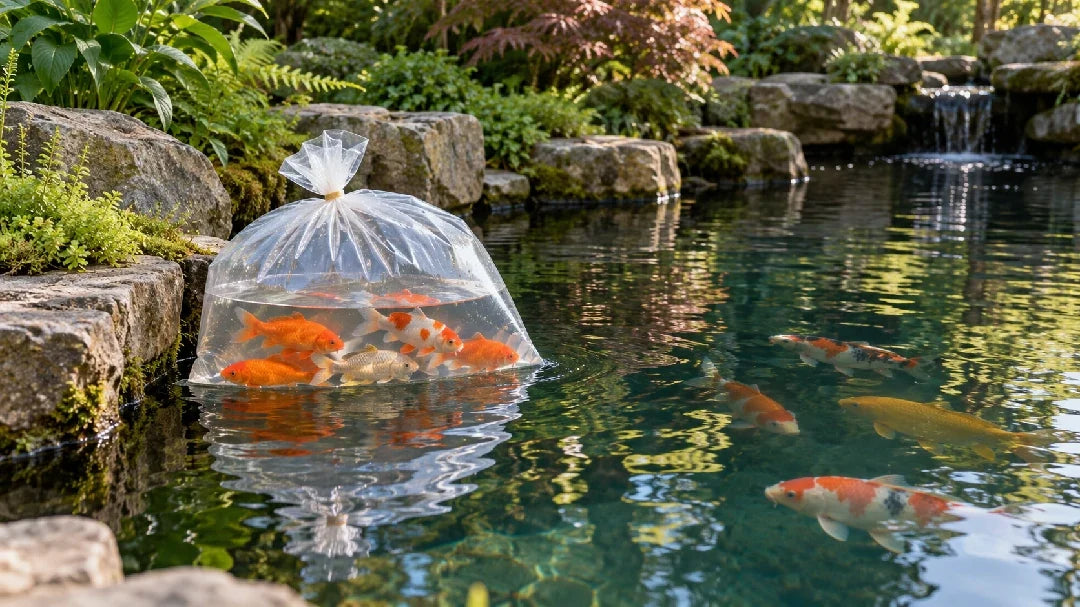
Introducing new fish to your pond might be a fascinating experience. But there is no point in simply putting fish directly into the new environment. The water in the bag is going to differ in temperature, pH level, and water parameters from the pond water. This is why acclimation (gradual adaptation to a new environment) is necessary. In this article, we are going to consider the importance of acclimating, how long to keep fish acclimating, and the best approach for introducing new fish to a pond.
Why Acclimation Is Important for Koi and Goldfish
Acclimation is crucial because both goldfish and koi need time to adjust to environmental changes.
While your fish may seem healthy right now, an abrupt change in water parameters is likely to cause stress. And stress always negatively impacts health.
Gradual introduction helps fish safely transition from one water environment to another.
Temperature Shock
The first parameter fish notice is the temperature.
Fish cannot regulate their body temperature themselves. It changes depending on the temperature of the water.
If the water in the bag differs too much in temperature from the pond water, the fish can get temperature shock.
Symptoms may include:
- Staying still at the bottom
- Slow swimming speed
- Lack of appetite
- Strange behavior
That is the reason why most pond owners wonder how long to float new fish.
Floating the bag allows fish to gradually adapt to the water temperature.
Water Chemistry Changes
Another important thing to acclimate to is the water chemistry.
Your pond water may have different levels of:
- pH
- Ammonia
- Nitrite
- Minerals
And even if your pond water is completely healthy, it does not necessarily mean that the fish are used to these conditions.
Gradual transition provides more time for adaptation.
Signs of Stressed Fish
It is quite normal for the fish to hide after introduction.
However, pay attention to the signs of difficulty with adjustment.
Common symptoms of stress in fish include:
- Rapid breathing
- Not staying with the group
- Strange swimming behavior
- Long refusal to eat
Some fish need a day or two to get used to the pond.
Preparation of the Pond Prior to Fish Introduction
Before figuring out how long I should acclimate my fish, prepare the pond.
Introduction to unstable pond water may cause problems even if the acclimation process is performed right.

Test the Pond Water First
Before introducing new fish, test your pond water.
Some of the important tests are:
- pH level
- Ammonia
- Nitrite
- Nitrate
These tests help you understand if the pond environment is stable enough.
This step becomes especially important for newly created ponds as they are unlikely to have enough beneficial bacteria.
A pond that seems to be clean can have unstable water parameters.
Remove Chlorine and Heavy Metals
If you have filled your pond with tap water, check its content for chlorine and chloramines.
They are harmless to humans but dangerous for fish.
Use a water conditioner when it is necessary.
In some cases, the water source may contain heavy metals that affect fish health.
Proper preparation of the water prevents additional stress.
Check if Filtration and Aeration Work
Good water flow is important for koi and goldfish.
Prior to fish introduction, make sure that:
- The pond filter works properly
- The pump moves the water
- Aeration (oxygenation of the water) works
Proper circulation maintains good oxygen levels and stabilizes water conditions.
A healthy pond environment makes it easier for fish to settle down.
How Long Should You Acclimate Fish in the Bag?
For most koi and goldfish, acclimation takes from 15 to 60 minutes.
The specific time depends on the difference between the water in the bag and your pond.
Many beginners ask how long fish need to acclimate in the bag.
Generally speaking, you need 5–10 minutes of floating the sealed bag and further gradual introduction of pond water to the bag.
How Long to Float New Fish
So, how long should you float new fish?
Usually, 5–10 minutes are enough for temperature adjustment.
Keep the bag sealed while you are floating it.
In this case, fish slowly adapt to temperature changes.
Do not float the bag for many hours. The level of oxygen in the bag gradually decreases.
When It Is Necessary to Extend the Acclimation Time
There are some cases when you need more time.
Consider taking additional time for acclimation if:
- Fish have been transported for a long time
- Pond temperature differs significantly
- Fish seem to be weakened
- Water conditions are different
In this case, gradual addition of pond water during an extended period of time helps.
Why It Is Dangerous to Rush the Process
One of the common mistakes is opening the bag and immediately releasing fish.
This causes abrupt changes in:
- Temperature
- pH level
- Water chemistry
Even healthy fish may react badly to such changes.
When considering how long to acclimate goldfish, remember that a few extra minutes may make the transition process much easier.
Step-by-Step Instructions for Releasing New Fish
The process of fish release must be easy and calm.
It is better to take your time in order to reduce stress in fish.

Step 1: Keep the Fish Bag in a Cool and Shaded Place During Transportation
During transportation, try not to leave the bag in the sun.
The heat increases the temperature of the water in the bag rather quickly.
Keep the fish in a cool place until you are ready to perform the acclimation.
Step 2: Float the Bag in the Pond
Put the bag onto the pond surface.
Let it float for 5–10 minutes.
This will help fish to get used to the pond temperature.
Step 3: Introduce Pond Water Gradually
Having floated the bag, open it carefully.
Pour a small portion of pond water into the bag.
Wait a couple of minutes.
Repeat this procedure several times.
This allows fish to gradually get used to the water chemistry.
Step 4: Release Fish Gently and Do Not Pour Bag Water Into the Pond
Finally, release the fish carefully into the pond.
A small net can help you with the safe transfer of fish.
Try not to pour water from the bag into the pond because it may contain debris and undesirable substances.
Step 5: Pay Attention to Fish Behavior After the Release
Having released fish, observe them.
The signs of healthy adjustment include:
- Normal swimming
- Exploring the pond
- Moving with other fish
Try not to feed the fish right away.
Generally speaking, new fish are not interested in eating within the first few hours.
Let them get used to the new environment.
Help Your Fish to Get Used to a Healthy Pond
Introducing koi and goldfish should be a gradual process.
Most fish need around 15–60 minutes of acclimation, including the first 5–10 minutes of floating the bag.
The most important things are stable pond water, proper filtration and aeration, and observation after the release.
A well-designed pond makes it easier to take care of fish in the long term. Good circulation and filtration create a healthier environment and reduce future maintenance problems.
Poposoap specializes in providing reliable solutions for simple pond water management. A stable pond environment allows you to spend more time observing the fish and less time dealing with water problems.

20W Solar Pond Filter & Fountain Kit
Built-in 280 GPH pump, filter box + bio media, helps acclimate Koi and Goldfish better, eco-friendly ponds.
Shop NowFAQ
1. How Long Do Fish Need to Acclimate in the Bag?
Most koi and goldfish need 15–60 minutes of acclimation, including 5–10 minutes of floating the bag.
2. How Long Should I Acclimate My Fish Prior to the Release?
Generally speaking, 15–60 minutes is enough.
3. How Long to Let Fish Acclimate After Adding Pond Water?
Add the pond water gradually for several minutes before releasing the fish.
4. Can I Release New Fish Into My Pond Immediately?
No. The abrupt change in water conditions causes stress and temperature shock.


Leave a comment
All comments are moderated before being published.
This site is protected by hCaptcha and the hCaptcha Privacy Policy and Terms of Service apply.