

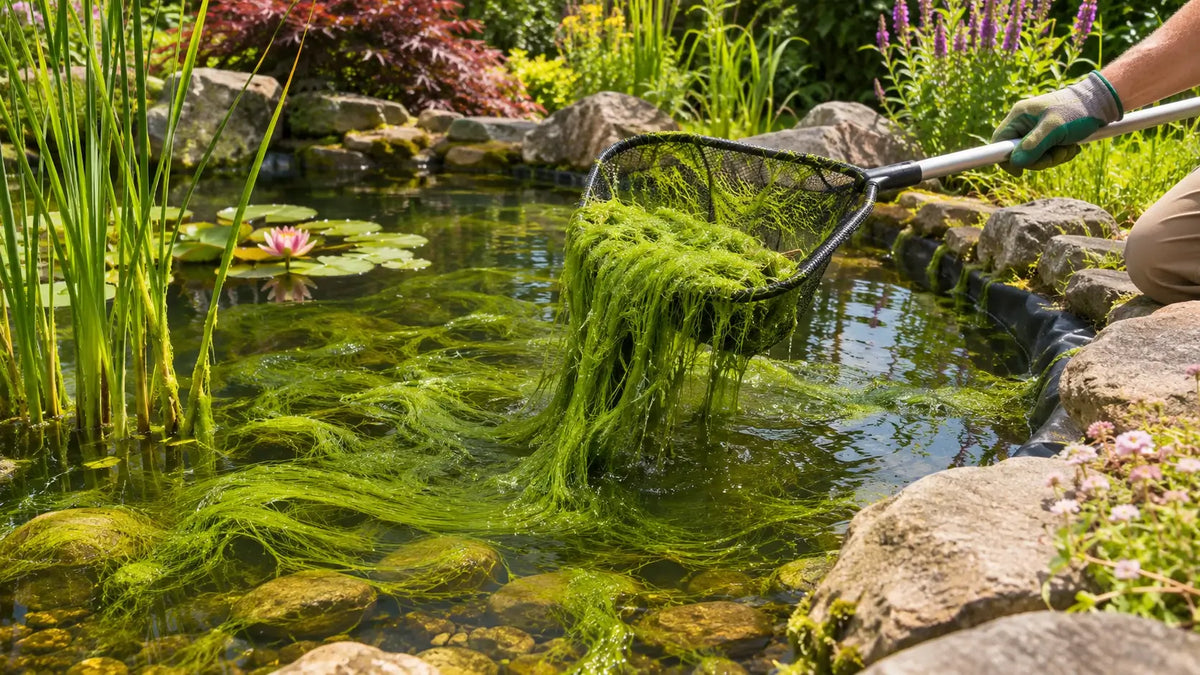
Blanket weed is a nuisance for numerous pond owners. In the warmer months, a tidy pond can transform into a murky green one in no time. Such stringy algae covers rocks, other plants, and even the water surface in some cases. While having a small amount of such algae is considered normal, an excess of blanket weed may disrupt the balance of your pond. The good news is that blanket weed can be controlled. You just need to learn why it grows and how to remove it.
What Is Blanket Weed?
Blanket weed is an example of string algae growing in the form of tangled strings within the pond. Unlike some other kinds of algae that live in the water freely, blanket weed tends to attach itself to various surfaces and create dense green bunches resembling wool or a blanket. Hence the name "blanket weed algae".
While algae are a natural component of the pond's ecosystem, uncontrolled growth can cause a lot of trouble.
Blanket Weed vs. Green Water Algae
While blanket weed and green water algae might seem similar at first, they grow in completely different manners.
Green water algae are tiny organisms floating in the water. They multiply, thus making the water appear green.
Blanket weed grows as strings or mats.
You can find it attached to:
- Pond rocks
- Waterfall zones
- Plant stems
- Pond liners
- Filters and pumps
While sometimes green water can be managed with the help of filtration, blanket weed should be removed physically.
Why Blanket Weed Spreads Quickly
Blanket weed spreads rapidly when the pond environment provides the optimal conditions for its growth.
The main causes include:
- Excess nutrients in the water
- Warm temperatures
- Intense sunlight
- Slow water movement
Due to the presence of more sunlight and warmer temperatures, blanket weed tends to grow rapidly in the warmer months.
In case the necessary nutrients for growth are provided by decayed leaves or waste products from the fish, blanket weed continues to grow.
When It Becomes a Pond Problem
Though a small amount of blanket weed is not dangerous, it turns into a problem when it starts covering the majority of the pond.
Excessive growth of blanket weed may:
- Cover aquatic plants
- Reduce space for fish to swim
- Collect dirt and debris
- Affect the appearance of your pond
Besides, when blanket weed dies and breaks apart, it contributes to the growth of organic waste in the water.
What Causes Blanket Weed in Ponds?
The main causes of blanket weed are typically associated with an imbalance in the water.
When the pond water conditions remain stable, the pond rarely experiences algae problems.

Excess Nutrients and Fish Waste
One of the most common causes of blanket weed is excess nutrients.
Waste products from the fish, leftover feed, and decaying leaves provide extra nutrients for the pond.
They decompose over time and release substances that algae require for growth.
Common mistakes include:
- Feeding fish too much
- Allowing leaves to accumulate
- Not cleaning filters regularly
- Having too many fish in the pond
It doesn't mean that nutrients are bad in general. On the contrary, they are needed both by plants and other components of the pond's ecosystem. However, the problem appears when the amount of nutrients exceeds the capacity of the ecosystem.
Sunlight and Shallow Water
Another cause of blanket weed is sunlight.
Ponds receiving intense sunlight all day are more prone to developing blanket weed.
Shallow zones are especially vulnerable due to rapid warming of the water.
The simplest steps to decrease sunlight exposure include:
- Adding floating plants
- Creating plantings around the pond
- Providing partial shade
The plants will also help to use the necessary nutrients for their growth instead of providing them for algae.
Poor Filtration or Circulation
Water movement is another crucial factor.
If there are any still zones within the pond, waste tends to accumulate there.
In case of poor circulation, you may face:
- Uneven oxygen levels
- More accumulation of debris
- Poor filtration
A good pump and filtration system help move the water and remove the waste.
For homeowners who are interested in easy pond maintenance, Poposoap filtration products can help to achieve better circulation and filtration of the water. A cleaner circulation system helps to provide conditions that aren't favorable for excessive algae growth.

How to Remove Blanket Weed
The best way to get rid of blanket weed is to combine manual cleaning with proper pond management.
Manual removal of visible algae helps to improve the appearance, but avoiding its further appearance requires solving the problem with the conditions that helped it grow.

Manual Removal
Manual removal is the first step in getting rid of most of the blanket weed.
Use:
- Pond nets
- Garden rakes
- Long sticks
Carefully collect the algae and remove it from the pond.
Be sure not to stir the bottom of the pond, as it will release the accumulated waste into the water.
When you finish, take the collected algae far away from the pond.
Don't leave it near the pond because rainfall can wash the nutrients back into it.
Blanket Weed Treatment Options
There are blanket weed treatments that can help you in case manual removal isn't efficient enough.
Various types of treatments have various mechanisms. They can help reduce the growth of algae by altering their conditions for survival.
When choosing the best blanket weed treatment, you should consider:
- Pond size
- Safety for fish and plants
- Water conditions
- Instructions of the product
Be sure to use the recommended amount of the treatment.
An overdose won't necessarily lead to better results. An excess of the treatment can harm fish and beneficial bacteria living in the pond.
What to Avoid During Removal
Many pond owners tend to try to clean everything at once.
Things that you should avoid are:
- Emptying the whole pond
- Removing all plants
- Cleaning all filter materials with tap water
- Using strong chemicals without safety checks
Beneficial bacteria (natural microorganisms breaking down waste) play an essential role in the functioning of the pond.
A gentle approach usually works better.
How to Prevent Blanket Weed from Coming Back
Preventing blanket weed is easier than eliminating it.
The goal here is to create a stable environment for the pond where algae will have fewer opportunities to grow.

Reduce Nutrient Buildup
Management of nutrients is one of the most efficient prevention methods.
Habits that can help:
- Feed fish only with what they need
- Remove fallen leaves
- Clean excess plant material
- Maintain your filtration system
A clean pond doesn't mean removing everything. It means managing the waste.
Improve Water Movement
Water movement helps to maintain healthier pond conditions.
Movement of the water can:
- Improve the distribution of oxygen
- Reduce the number of stagnant zones
- Help filters to operate efficiently
A properly sized pump makes a significant difference.
The water movement doesn't have to be intense. Gentle circulation will help to prevent zones with algae.
Add Shade and Plant Coverage
Plants play an important role in the balance of the pond.
They can:
- Provide shade
- Utilize nutrients
- Create a healthier environment
Good options include:
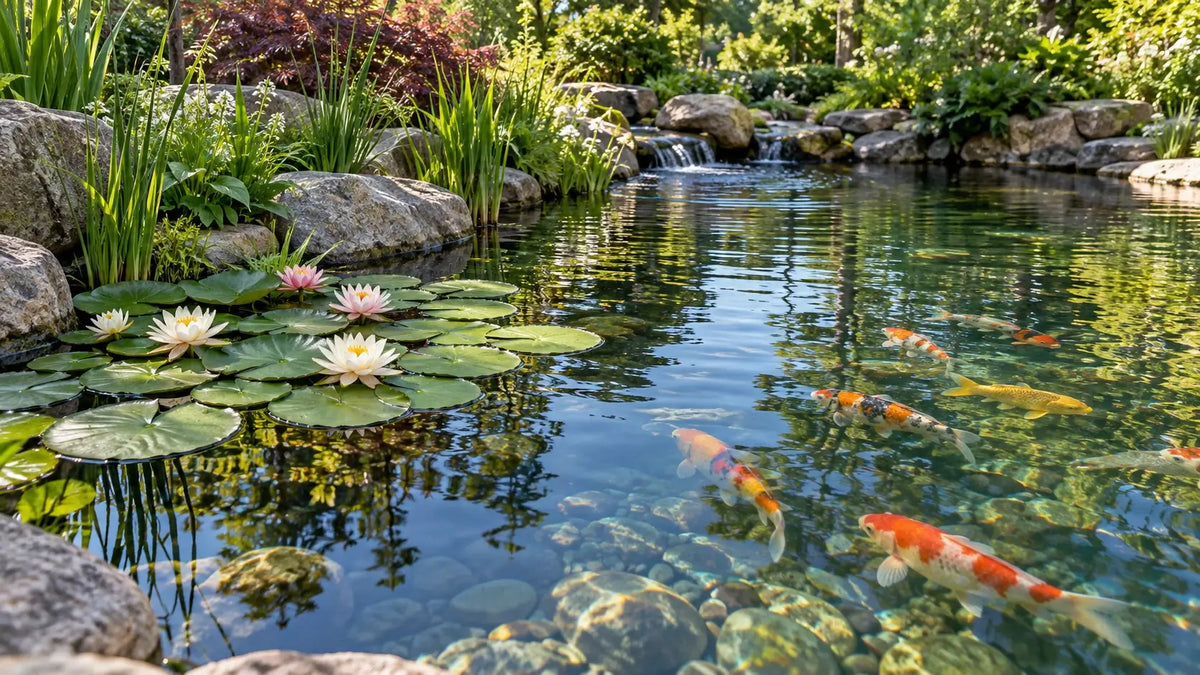
- Water lilies
- Floating plants
- Marginal pond plants
The combination of plants, filtration, and circulation usually works better than focusing only on one thing.
Keep Blanket Weed Under Control with Regular Care
Blanket weed is a common pond problem, but it doesn't have to become your constant trouble.
The most efficient solution is regular care. Remove algae on time, maintain water movement, manage nutrients, and keep your filtration system running properly.
A healthy pond cannot be created by a single treatment. It's achieved by keeping the balance in the ecosystem.
For homeowners who are interested in a simplified maintenance routine, filtration and circulation products can help to keep your pond healthy. Poposoap focuses on practical water solutions that allow homeowners to keep their outdoor water features clean and easy to manage.
With the help of consistent care, blanket weed can be kept under control, and your pond can remain an enjoyable part of your garden.

20W Solar Pond Filter & Fountain Kit
Built-in 280 GPH water pump, filter box and bio-filter media
Shop NowFAQ
1. What causes blanket weed in ponds?
Blanket weed appears in ponds due to excess nutrients, intense sunlight, warm water, and poor circulation.
2. How do I remove blanket weed from my pond?
Remove it manually first, then improve filtration, water movement, and the balance of the pond.
3. Is blanket weed treatment safe for fish?
Yes, if applied properly. Be sure to follow the product instructions and use products designed for fish ponds.
4. Can plants help to prevent blanket weed?
Yes. Plants can provide shade and utilize nutrients.

Leave a comment
All comments are moderated before being published.
This site is protected by hCaptcha and the hCaptcha Privacy Policy and Terms of Service apply.