

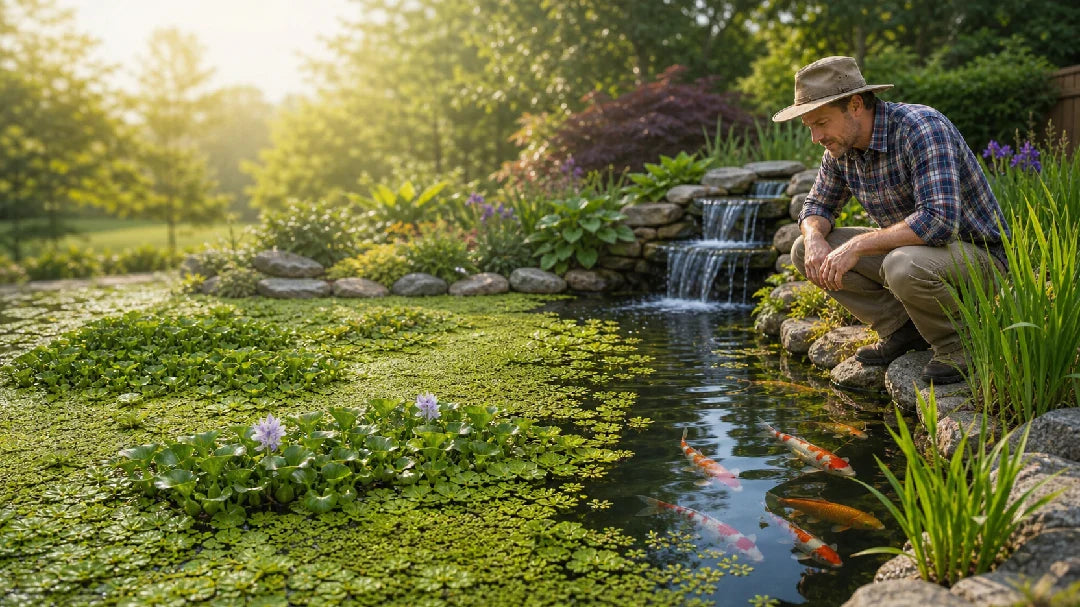
It is quite common for pond owners to enjoy using different kinds of plants.
Not all plants react in the same way in pond environments.
Some of them grow rapidly and become uncontrollable.
These are called invasive aquatic plants and can ruin ponds by taking over.
This article will guide you in recognizing invasive aquatic plants, understanding how they affect the pond ecosystem, and managing them effectively.
Why Are Invasive Aquatic Plants So Dangerous?

What Is Meant by "Invasive"?
Not all rapidly growing plants are problematic.
Invasive plants usually develop very rapidly and start to spread uncontrollably, competing with other local plants and taking over.
What Makes Them Spread?
Such plants tend to have efficient growth mechanisms.
They multiply through seeds, roots, and fragments.
Even tiny fragments may become full-fledged plants.
Moreover, there are no natural predators to control their multiplication.
Consequences of Invasive Pond Weed Multiplication
The invasion of such weeds creates additional layers on the surface, limiting light penetration.
As a result, the development of other plants becomes impossible, and oxygen levels in the water drop.
Poor oxygen conditions might negatively impact the health of your fish.
Invasive Pond Plants That You Should Pay Attention To
Floating Invasive Species
It is rather easy for these plants to reproduce quickly.
These invasive species include:
- Duckweed (a floating weed that multiplies very fast)
- Water hyacinth
- Salvinia
They create multiple layers that prevent sunlight from penetrating the water.

Submerged Invasive Aquatic Plants
Such plants grow under the water surface.
Typical examples include:
- Hydrilla
- Eurasian watermilfoil
They form dense underwater layers, which make movement difficult for fish.

Edge and Root-Spreading Plants
These species usually grow along the edges and multiply through roots.
Over time, they gradually take up all available space along the pond's edge.
Are Lily Pads Invasive?
One of the most common questions is whether lily pads are invasive.
Usually, water lilies are not considered invasive; however, they may become problematic if not managed properly.
Trimming lily pads regularly keeps the situation under control.
Why Is It Important To Identify Invasive Species?
Some invasive pond species are banned in specific areas.
Therefore, it is better to know exactly what you are adding to your pond to avoid future problems.
Controlling Invasive Aquatic Plant Growth

Acting Quickly
As mentioned above, it is much easier to remove plants when they first begin to spread.
Therefore, if you notice any signs of rapid plant development in your pond, you should remove them immediately.
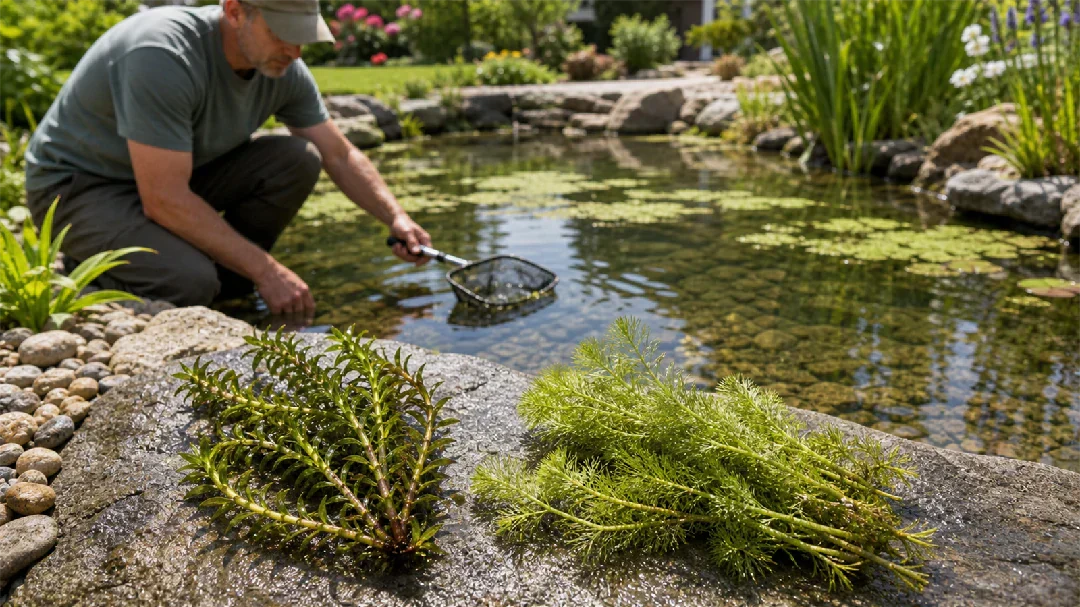
Removing Plants Manually
Manual removal is a relatively safe method.
Use specialized tools to extract invasive plants while trying to remove the roots as well.
Using Chemicals Cautiously
Chemical control methods help eliminate such plants quickly.
However, this approach may negatively impact fish and beneficial bacteria.
Therefore, it is better to use alternative methods whenever possible.
Improving Water Flow
Moving water does not favor excessive plant growth.
Proper pond circulation ensures constant water movement, avoiding still areas that are prone to plant growth.
For small sunny ponds, a solar fountain can provide gentle water movement and help reduce stagnant areas.
For larger pond designs, a waterfall kit can create a continuous return flow while adding movement and visual interest to the pond.
To find out more about filtration and circulation systems in ponds, check out our website:
Proper filtration and circulation will help maintain better water conditions in your pond.
Sources of Invasive Pond Plants
Invasive Pond Plants Introduced Intentionally
At times, invasive species may accidentally appear in ponds due to a lack of awareness during purchase.
They often come from garden stores but are not always clearly labeled.
Transfer by Wildlife and Water
Birds and wildlife can introduce invasive plants into a pond.
Water transferred from another pond may contain plant fragments that begin growing later.
Preventing Invasive Pond Plants
- Identify plant types before adding them to the pond.
- Buy plants from reliable sources.
- Sterilize tools and containers before reusing them.
Long-Term Invasive Species Prevention
Maintaining a healthy and balanced pond ecosystem is the best preventative measure.
Regular cleaning, improved circulation, and proper plant selection help prevent invasive aquatic plants from appearing.

Conclusion
Invasive species may significantly change the appearance and overall condition of a pond within a short period of time.
Small changes can become major problems if not addressed.
Understanding the behavior of invasive pond weeds and carefully choosing pond plants helps prevent their spread.
Basic steps taken regularly and early on significantly reduce plant growth.
Poposoap provides filtration and circulation products to help maintain your pond.
READ MORE: What Eats Aquatic Plants in a Pond?

SPF326 20W 280GPH Solar Pond Filter Fountain
$119.99
Clean and oxygenate your pond with this 20W solar pond filter pump. Eco-friendly 280GPH flow ideal for small to medium backyard water features.
FAQ
1. What are invasive aquatic plants?
They are plants that grow rapidly and spread uncontrollably.
2. Are all rapidly growing plants considered invasive?
No, although invasive plants are typically difficult to control.
3. Can invasive plants harm fish?
Yes, oxygen levels in the pond may drop because of excessive vegetation.
4. How can I prevent invasive pond plants from growing and spreading?
Early plant removal and improved water circulation may be helpful.


Leave a comment
All comments are moderated before being published.
This site is protected by hCaptcha and the hCaptcha Privacy Policy and Terms of Service apply.