

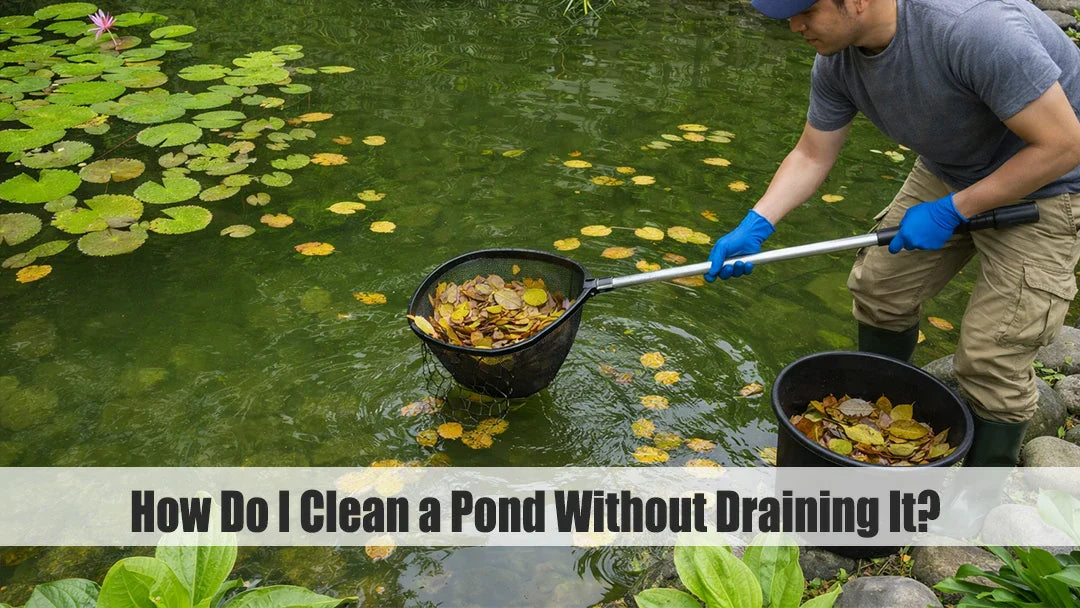
Every pond owner eventually reaches this point. The water becomes murky. The bottom of the pond is a mess. The fish are swimming around just fine, but the pond isn't looking very healthy. The idea crosses one's mind to just drain the whole system and start again.
I've been there too. And the response is usually the same — almost always no.
Pond draining seems like such an ultimate fix, but it tends to do more harm than good. Just think: after you drain your pond, you're not just getting rid of dirty water. You're getting rid of helpful bacteria, stressing fish, and starting the entire ecosystem over from scratch. And then, of course, a few weeks later, the water is murky again.
This piece discusses the steps involved in pond cleaning when fish are present in the pond, when draining the garden pond is not the best option, and how to clean pond water to keep it clean.
What Really Happens When You Drain a Pond
A pond is not a swimming pool. It's an ecological unit.
Clean water means balance, not substitution. Beneficial bacteria are on surfaces, not in water. There are bacteria in the filter, on the rocks, on plant roots, and in the thin layer of sediment on the bottom.
The organisms being taken out by people during the process of emptying a garden pond are, in actuality, the same organisms responsible for managing pond waste. The fish waste, left-over foods, and decomposition of leaves are not eliminated by new water present in the pond.
This is why the community finds itself in a vicious circle of trying to drain the pond and then fill it up again. Nothing was wrong with the water. It was the imbalance.
When Draining Is Actually Necessary
Sometimes drainage is necessary. Structural damage, a failed liner, contamination by chemicals, or a complete rebuild might necessitate this. Cloudy water, algae, or light sludge residue is not a reason.
Draining should always be the last resort to consider if fish are living and moving.
How to Clean a Pond With Fish Still In It
The approach for a pond where fish live is completely different. You're not trying to make it crystal clean. You're trying to make it stable.
Start with What You Can See

Take out floating debris first. Leaves, branches, and dead plant matter are no-brainers. A net is effective without disturbing anything else.
Then examine the bottom. Some sludge is to be expected. Thick sludge layers must be removed. This may be accomplished by pond vacuum or siphoning. This should not be an effort to remove as much sludge as possible. This is especially the case concerning pond water cleaning techniques for ponds containing fish. This defeats the purpose of pond water cleaning methods.
Improve Movement, Not Just Cleanliness

A pond can become cloudy if the water becomes stagnant. Water movement allows oxygen to move into the water, making it easier for bacteria to function.
Adding some gentle movement is always going to do much more for your pond than scrubbing ever will. You can start things off right using a simple system such as a 20W 280GPH Solar Pond Filter Fountain by Poposoap.
Rethinking Feeding and Stocking

Overfeeding is among the quickest methods of fouling water. When food reaches the bottom unconsumed, that is waste. Feed less than what you believe you require. Fish are more hardy than cloudy water.
Also, keep in mind your fish population. Ponds that are too full of fish are always dirty, regardless of how frequently they are "cleaned."
Methods to Clean a Natural Pond Without Using Harsh Chemicals
Algaecides work quickly to kill the algae, but the dead algae will eventually decompose in the body of water. The decomposition process uses oxygen and returns nutrients to the pond. The fish may live, but the ecosystem is imbalanced.
A natural pond will respond better to gradual correction:
- Add more shade with plants.
- Enhance water circulation.
- Reduce excess nutrients in a slower process.
Penn State Extension discusses how excess nutrients and imbalance of oxygen levels interact in pond ecosystems at this link: [Click here]

Maintenance Practices Preventing Drainage Issues in the Future
The reason that most ponds only require a full clean-out is that small issues have been disregarded for too long.
These simple habits cut down on the need for ever having to think about draining again:
- Remove leaves before they sink.
- Wash filters using pond water, not tap water.
- Feed according to changing temperatures.
- Prevent extreme water changes.
Once the pond is established, it is easy to maintain. Cleanups become minimal.
The end result isn't an ideal-looking pond. Ideally, it's resilient.
Conclusion
Well, how can you clean a pond without draining it?
Instead of being the enemy of dirty water in the pond, you begin treating imbalance in the ecosystem as the problem that needs to be solved. Through physical cleaning and circulation of the water, the desired balance in the pond is achieved without damaging the fish or the bacterial life in the water.
Emptying the pond should be saved for emergency conditions, not maintenance work.
If you want to home in on a specific aspect of this process, this next guide is definitely worth a read: How to Clean a Pond Filter Without Damaging It

P2326D 40W 660GPH AC Pond Filter Fountain with Light
$89.99
Keep your pond water clear with the P2326D AC pond filter fountain. Includes pump, multi-stage filtration system, and built-in light for night beauty.
Frequently Asked Questions
Can I clean my pond without removing fish?
Yes. In most instances, the fish should be left in the pond.
How often do I clean my pond?
Light, frequent maintenance is preferable to occasional, thorough cleaning.
Are chemicals needed in natural ponds?
No. A balanced ecosystem, not chemicals, is essential to a healthy pond.
When can I drain a pond?
Only in the case of structural damage, contamination, and complete redesigns.

Leave a comment
All comments are moderated before being published.
This site is protected by hCaptcha and the hCaptcha Privacy Policy and Terms of Service apply.