

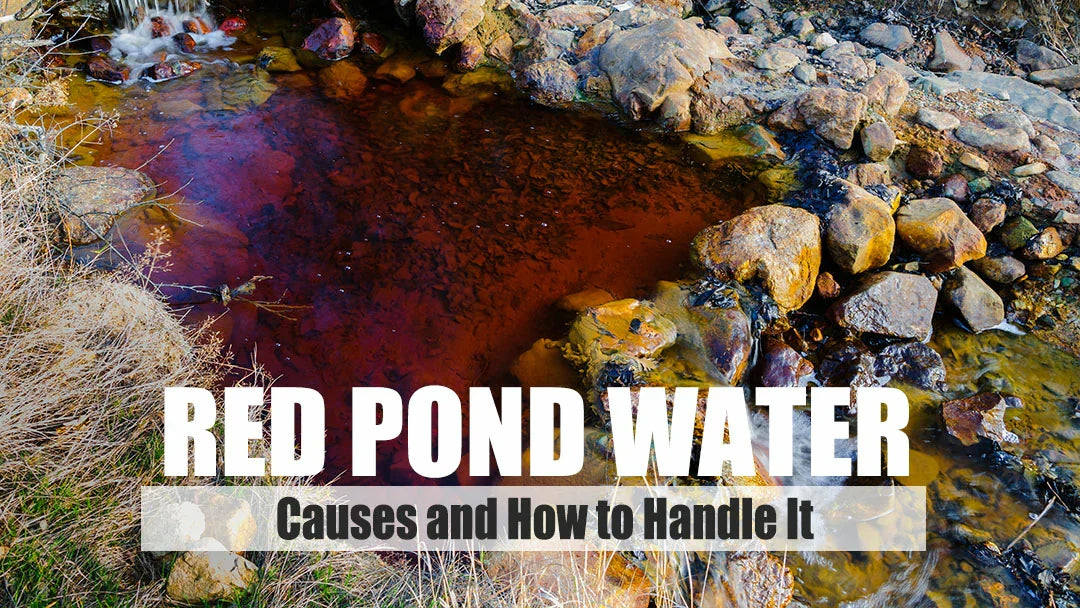
It is not unusual for a pond owner to be surprised and alarmed at the sight of red pond water for the very first time. Most people are used to seeing their pond water coloured green, and any other colour, such as red, might be very alarming and concerning for them. In most cases, however, the red water is not random, and there are usually underlying causes for such a dramatic change in the water's colour. In most cases, red water in a pond does not have a single cause, and there are usually a combination of factors that contribute to the red water. In this article, we shall discuss the causes of red water, whether it is harmful, and what you can do about it.
Why Does Water Turn Red? Understanding Red Algae in Pond Systems
When asked, "Why does water turn red?" most people would probably think that there is a simple, easy, and straightforward answer to that question. There isn't, and the reasons for red water are varied and complex.
Red water, or water with a reddish hue, might be caused by a combination of biological and chemical factors.
One of the possible causes of red water in a pond system is a bloom of certain microorganisms, commonly called red algae in pond water, although some of these are, in fact, cyanobacteria — a type of bacteria that acts like algae and contains pigments, which are naturally coloured compounds that give water a reddish, pink, or red hue.
A bloom of these bacteria occurs when:
- There is a strong presence of sunlight
- There are plenty of nutrients present
- There is little water movement

According to Michigan State University Extension, unusual colours, such as shades of red, in pond water are usually caused by algae growth and unusual environmental conditions.
The other possible cause is iron in the water. When you use water with iron from the ground, the water might appear clear when you add it to the pond. However, once it comes into contact with the air, it will oxidise, or react with the oxygen in the air, turning it reddish or rusty.
Leaves and wood can also be a contributing factor to red pond water. Tannins, which are natural chemical compounds, can affect the colour of the water. Tannins can turn water brown, but they can also give it a reddish appearance depending on the lighting.
Is Red Pond Water Dangerous?
Not always.
- If the water has iron, it is just a cosmetic problem, and the fish are not in danger.
- If the water has algae bloom, it can be a problem since the water will lack enough oxygen.
The problem with red pond water is how to determine the real reason before selecting a treatment.
How to Identify the True Cause of Your Pond Water Turning Red
When you notice that the water in your pond has turned red, it is important not to act impulsively by adding chemical treatment to the water immediately. Instead, follow these steps.
Step 1: Check the Appearance

When you notice that the water has turned red, check if it is cloudy or clear.
- If it is cloudy, it is likely algae bloom.
- If it is clear, it is likely iron.
Look at the water and check if there are small particles floating on the water surface.
Step 2: Think About Recent Changes

Consider the following questions:
- Did I recently add water to the pond?
- Has it been raining a lot, which could mean that the water has extra iron from the soil?
- Has it been very hot lately?
Hot weather can cause algae bloom, and rain can add more nutrients to the water, which can result in algae bloom.
Step 3: Test the Water

A simple test kit can help.
Also check ammonia and nitrate levels (waste indicators). High levels indicate too many nutrients.
Lastly, check the pH level (acidity level). Sudden changes in the level can cause imbalances.
Treatment Solutions for Different Causes
If Red Algae in the Pond Water Is Confirmed
- Improve water circulation. More water movement means less stagnation.
- Remove sludge from the bottom of the pond. Sludge is organic waste and food for algae.
- Reduce food input if you have fish. More food means more algae.
- Consider using UV filtration. This is ultraviolet light used to disrupt red algae cells.
If Iron Is the Cause
- Rely on natural water filtration to settle iron particles.
- Use filter materials that can filter fine iron particles.
If Plant Tannins Are the Cause
- Remove decaying plant matter from the water.
- Change water in small quantities.
- Avoid using chemicals to treat the water. Treating the wrong cause can make things worse.
Long-Term Prevention of Red Pond Water
It is great to fix red water in the pond. It is better to prevent it from coming back.

How to Improve Filtration
A balanced water filter must consist of:
- Mechanical filtration — removing visible particles from water
- Biological filtration — supporting the growth of beneficial bacteria
UV filtration can also help in preventing red water from coming back. UV stands for Ultraviolet. Ultraviolet is electromagnetic radiation. It has the highest frequency and can penetrate through matter. This means it can penetrate red algae cells and destroy them.
For instance, the Poposoap Pond Filter Fountain with Light has UV and mechanical filtration in one compact device. This device will help in keeping the water clear and preventing red water from coming back.

P2300 40W 660GPH AC Pond Filter Fountain with UV Clarifier
$89.99
All-in-one pond filter with UV light: 660GPH pump for 1180-gal ponds, 3 nozzles, diverter valve, multi-stage media. Fish pond filter with UV light.
How to Control Sunlight Exposure
Too much exposure to sunlight can cause red water to come back.
Plants can provide shade for the water. Plants also absorb nutrients from the water.
Avoid Overfeeding
The fish will produce waste that is full of nutrients. Feed them small portions of food. Watch how fast they eat their food.
If you notice that the food you give them does not disappear, you are overfeeding.
Keep a Regular Maintenance Routine
- Remove any fallen leaves from your pond once a week.
- Rinse your filter pads gently.
- Check your pump to see how strong its flow is.
Conclusion: Restoring Balance and Preventing Red Pond Water
While red water may be an indication of an imbalanced pond, it is not necessarily a bad sign. It is merely an indication that something is wrong. However, while you may be wondering why your pond water turns red, you may not be wondering how to prevent red pond water.
While red water may be caused by red algae that develops within your pond water, you can prevent red pond water by observing your pond water and maintaining your pond regularly.
While clear water is necessary for your pond, you may not know that clear water is not necessarily an indication that your pond water is balanced. A balanced pond is one that is free from red algae, among other imbalances.
While you may not be aware, you can always keep your pond water clear by investing in water filtration systems such as those made by Poposoap.
While you may be wondering how to prevent red pond water, you may not be aware that ponds that do not develop red water are not necessarily balanced. A balanced pond is one that does not develop red algae.
READ MORE: How do you keep a water fountain free of algae?

P2326D 40W 660GPH AC Pond Filter Fountain with Light
$89.99
Keep your pond water clear with the P2326D AC pond filter fountain. Includes pump, multi-stage filtration system, and built-in light for night beauty.
Frequently Asked Questions
1. Does Red Pond Water Always Come from Algae?
No, iron and tannins can also be the cause.
2. Can Fish Live in Red Pond Water?
Yes, depending on the level of oxygen.
3. Does UV Filtration Prevent Red Algae?
UV filtration can reduce red algae cell count.
4. How Fast Does Red Water Clear Up?
In mild cases, you may expect your pond water to return to its original colour within a few days after you have restored its balance.

Leave a comment
All comments are moderated before being published.
This site is protected by hCaptcha and the hCaptcha Privacy Policy and Terms of Service apply.