

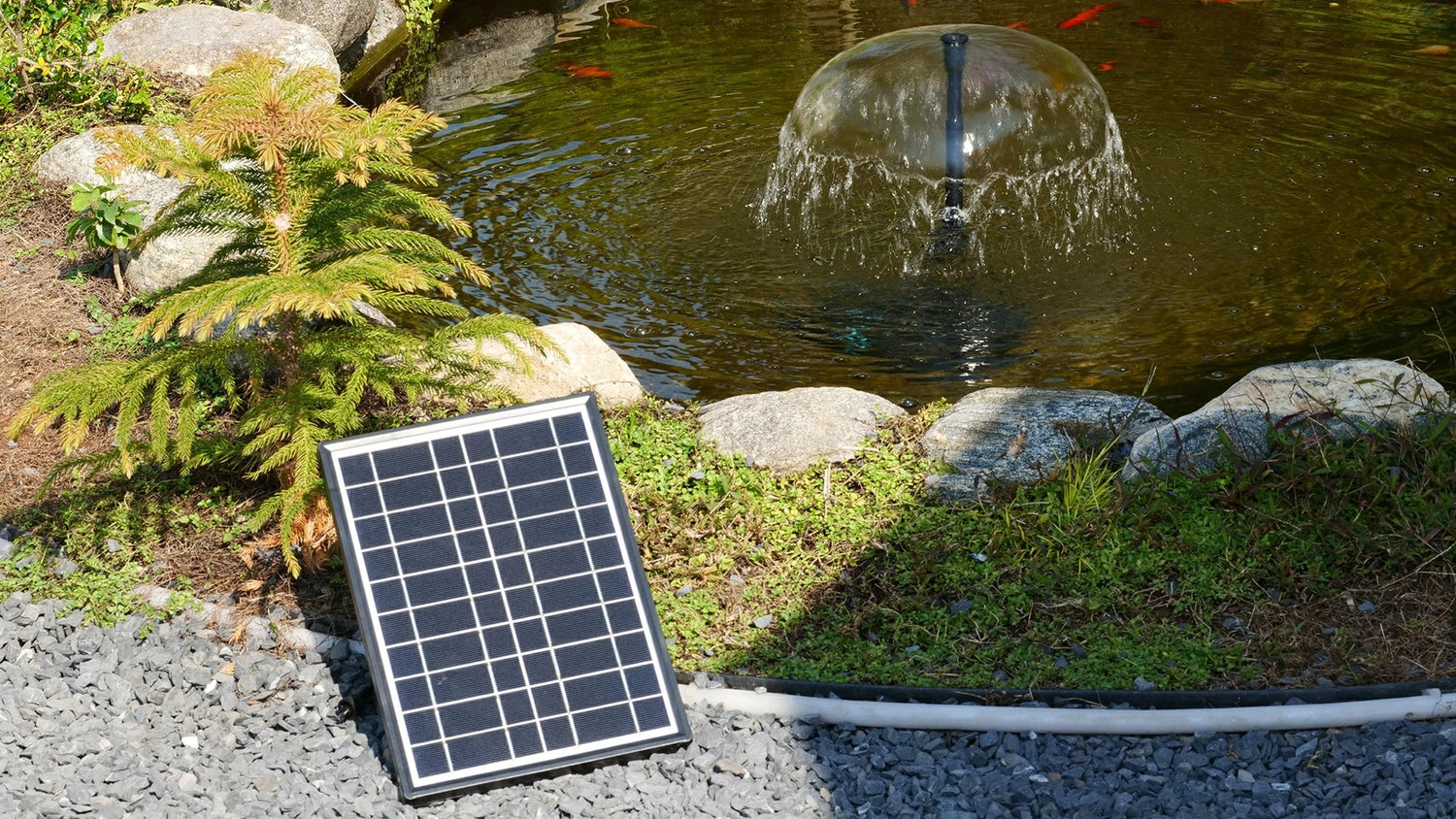
You've just installed a new solar fountain in your backyard — the sound of flowing water is carried on the wind, birds begin to drop by, and everything is perfect. Then clouds roll in, and before you know it, the water crawls to a halt or just stops. You find yourself thinking: Do solar fountain pumps require direct sunlight to operate?
This is one of the most common questions garden owners ask when choosing or maintaining a solar-powered fountain pump. The answer depends on the design, quality, and whether your pump includes a built-in battery. In this complete guide, we’ll explain how solar fountains work, what happens when sunlight is weak, and how Poposoap’s advanced solar systems keep your fountain flowing even on cloudy days.

How Solar Fountain Pumps Work
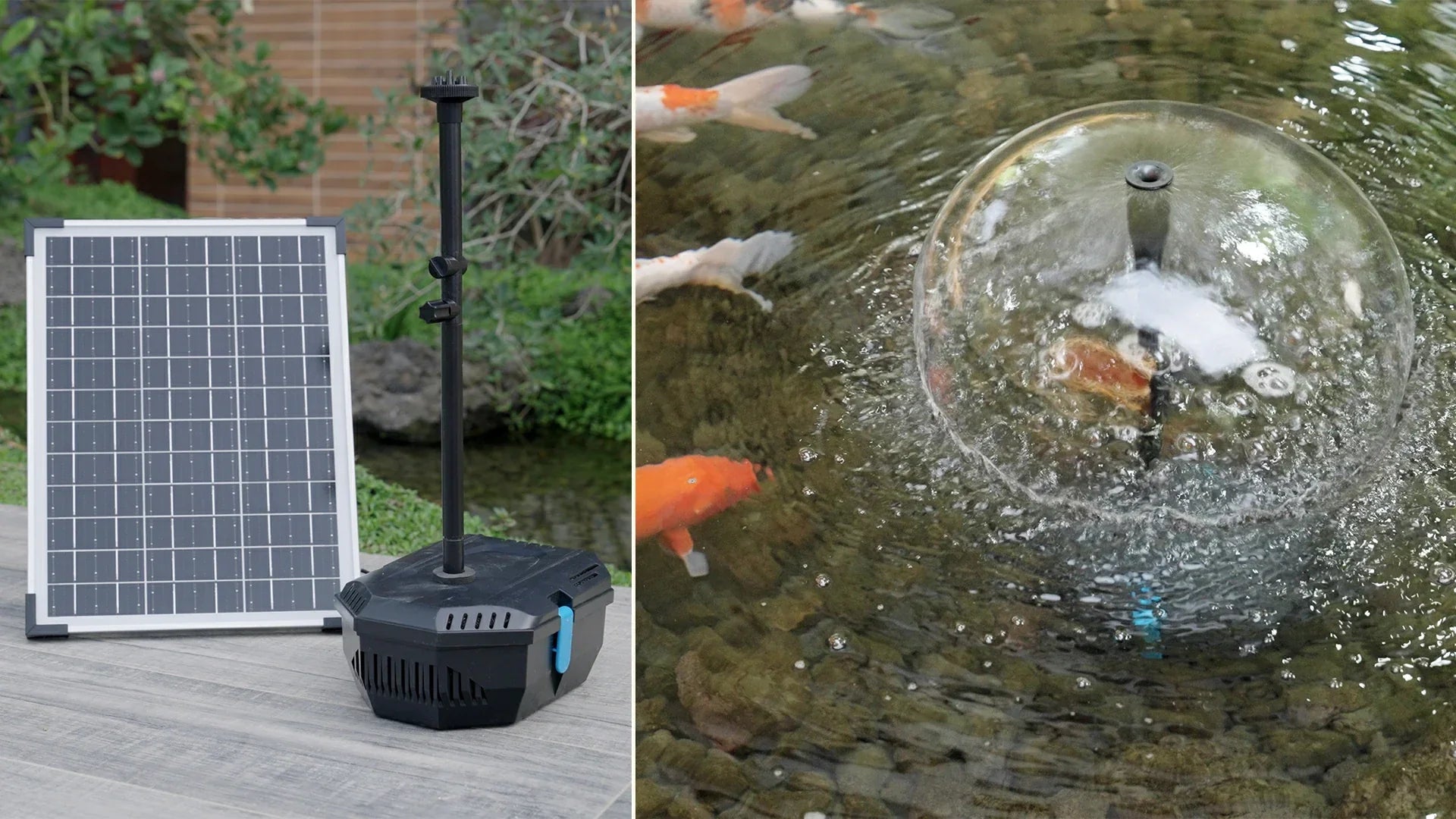
A solar fountain pump is powered by photovoltaic (PV) panels that convert sunlight into electricity. The electricity drives a small motor inside the pump, drawing water and pushing it through a nozzle or tube to create a spray or gentle stream.
In direct sun, the panel generates enough electricity to power the pump at full speed. In cloudy conditions, the electricity is reduced, as is the water flow.
Poposoap garden solar fountains have high-efficiency monocrystalline panels, which use more light than standard ones. When combined with brushless motors and smart energy control, this provides seamless operation even in sunlight-suboptimal times.
Do Solar Fountain Pumps Need Direct Sunlight?
Short answer: Yes, solar fountain pumps work best under direct sunlight.
Direct sunlight provides the panel with maximum exposure so that it can generate full electrical output. Otherwise, the pump would slow down or even stop, especially if there's no energy storage.
But that doesn't mean solar fountains must function under perfect weather. Thoughtfully designed panels, such as those on Poposoap solar fountain pumps, still function off diffused light — soft and available on overcast days. The water pressure may not be as forceful, but the pump does move the water so it won't stagnate.
So, although direct sunlight provides the best possible outcome, advanced technology allows your fountain to remain "alive" even when weather conditions are poor.
What Happens When There Is No Direct Sunlight?
When the sun is clouded over or the fountain is partly shaded, the solar panel receives reduced power. Therefore:
- The water stream becomes weaker as the pump is given less power.
- Without a battery, the pump will temporarily turn off until sunlight reappears.
- On long overcast days, the panel may not be able to produce enough charge to automatically start up.
That is why the position is important. Keep the solar panel facing the maximum direct sunlight exposure — typically 5–6 hours a day. Fortunately, Poposoap's solar pumps for fountains are made to keep going smoothly in inclement weather with efficient energy harvesting and battery configurations with power-saving surpluses.
How Battery Backup Makes Solar Pumps Work Even Without Direct Sunlight

An onboard battery backup system allows your solar fountain to keep working even when sunlight is limited or none at all. This is how it operates:
- During the daytime, the panel powers the pump and charges the onboard battery at the same time.
- At night, the system will turn on automatically by using battery power.
- The pump still runs for a few hours, and normal water pressure is provided.
Poposoap's battery models incorporate intelligent charging technology to optimize energy efficiency and battery life. They're ideal for homeowners who desire equal water flow — whether it's a bright sunny day, cloudy afternoon, or calm night.
Improving Solar Fountain Performance with Limited Sunlight
Even if your fountain doesn't enjoy full sun each and every day, there are some clever tweaks to maximize performance:
- Place Panels in the Sunniest Position: Place the solar panel with the cable provided out of shade.
- Clean the Panel Regularly: Leaves, bird droppings, and dust reduce light absorption by up to 25%.
- Adjust the Angle of the Panel: Tilt the panel towards the sun based on the location's latitude.
- Choose a Model with Back-Up Battery: Poposoap hybrid pumps still pump water even during cloudy weather.
- Minimize Water Resistance: Rinse filters and nozzles so the pump will not have to expend additional energy to push the water.
These small maintenance habits can yield huge returns in the functioning of your solar pump fountain year-round.

Sunlight and Solar Fountain Myths
New owners of fountains might have some myths in their minds about how solar functions. Let's dispel a few of the most prevalent:
-
"Sunlight and solar fountains don't function on cloudy days."
False. They continue to function on diffused light, albeit at lower power. -
"The panel must face straight up."
Not necessarily. Angling it toward the sun enhances efficiency during daylight. -
"All solar fountains turn off at night."
Only if they lack a battery backup. Poposoap's battery-powered ones operate after dark. -
"You can position the panel anywhere."
Incorrect. Even partial shade from trees or walls can reduce energy output substantially.
Understanding these facts allows one to set correct expectations and facilitate performance.
FAQ — Direct Sunlight and Solar Fountain Pumps
-
Q1: Do solar fountain pumps need direct sunlight to work?
They will work best in direct sunlight, but high-quality ones like Poposoap's will still work on diffused light on cloudy days. -
Q2: How is the performance if my fountain happens to be in the shade?
It reduces significantly. Realign the solar panel to sunnier positions with its extendable cord. -
Q3: Can my solar pump run in the evening?
Only if it is battery-backed. Poposoap's battery-backup systems run for 6–8 hours in the dark. -
Q4: How do I improve winter operation?
Clean panels occasionally, position them to catch lower sunlight, and avoid frost buildup on parts. -
Q5: What is the best solar fountain pump to support dynamic weather?
A Poposoap unit that has efficient panels and a rechargeable battery would be best suited for year-round usage.
Conclusion — Let the Sun Power Your Garden, Not Restrict It
So, do solar fountain pumps need direct sunlight? Technically, yes — the sun is their power source. But with proper design, location, and backup battery, your fountain does not necessarily need to go dark the moment clouds show up.
Poposoap garden solar fountains are built to deliver reliable performance with state-of-the-art solar panels, intelligent power storage, and effective filtration systems. Rain or shine, you can enjoy a peaceful, verdant water feature flowing freely — powered by the sun.

Leave a comment
All comments are moderated before being published.
This site is protected by hCaptcha and the hCaptcha Privacy Policy and Terms of Service apply.