


The introduction of any kind of fish, including koi, will always be associated with the appearance of certain risks. Nevertheless, this does not mean that fish should not be added to the pond, even during the period of autumn, when conditions can be somewhat worse compared to summer. In order to add fish, it is necessary to evaluate the condition of the pond in terms of temperature, water quality, and the condition of the pond inhabitants. Just a few weeks of warm autumn are enough, but if the pond has already entered winter mode, then it is advisable to postpone this procedure.
Can I Introduce Koi Into My Pond in the Fall?
Yes, you can introduce koi in the fall if the conditions in the pond allow, temperatures are favorable, and the fish are given enough time to get used to them.

Conditions of fall favorable for introduction of koi
Early autumn is easier to work with compared to late.
In this case, the main thing is the water condition, and not the dates themselves. The more favorable the water temperature and stable climate are, the higher the chances of successful introduction.
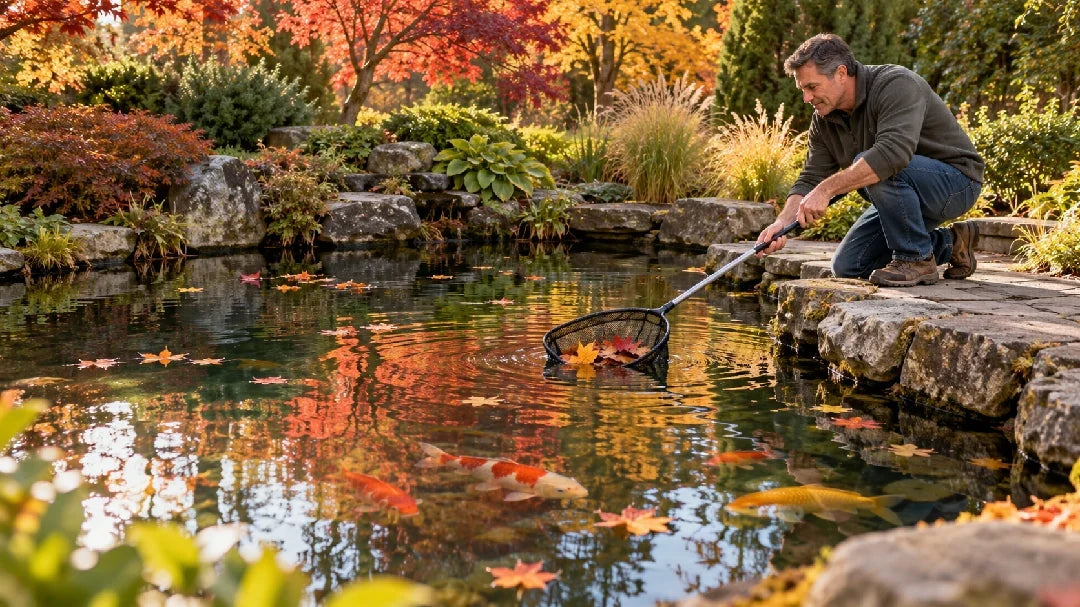
Check your pond in advance and make sure that all your inhabitants swim actively, and the filter and water quality are excellent.
Try to avoid the introduction of fish during a sharp cold snap in the autumn. The introduction of a new fish requires adaptation to transportation, water, and environment. Adding a sharp temperature drop in such conditions is an additional stress factor.
When to Wait Until Spring
Sometimes it will be better to wait until the spring season.
In case the water in the pond has already cooled down significantly, your fish stopped eating, or the winter is coming, it is better not to add new koi.
Also, spring may be the right choice if there are problems with the filtration system and water quality in the pond.
There are no prizes for quickness. If there is uncertainty, then quarantine or holding of new fish will be much more beneficial than adding immediately to the pond.
Risks of introducing new koi in late season
In late autumn, a new fish receives much less time for adaptation.
At low temperatures, metabolism (all processes related to the production and consumption of energy) in the fish's body slows down. As a result, koi become less active and consume less food, which complicates the process of observation.
Late arrival means that you will not be able to spend much time observing the behavior of the fish in normal mode before entering the winter season.
Another factor that increases the risk of death is stress. Transporting fish, changing water temperature, introducing it to the new environment and contact with other fish is stressful for it. For these reasons, careful introduction is extremely important in the fall.
How to Introduce New Koi to an Existing Pond
Introducing new koi to an existing pond requires prior quarantine of the fish, gradual matching of water temperature, and careful monitoring after placing the fish in the pond.

Quarantine before release
It is not recommended to place a newly purchased koi directly into your pond from a store bag.
The first stage is quarantine. The quarantine of a new fish (separation for observation) allows you to monitor the behavior of the fish, its presence of possible sores, parasites, etc.
The quarantine system should have the correct water quality, good oxygen saturation, and filtration. Quarantine does not imply leaving the fish in some bucket with water.
Such a procedure can seem inconvenient when you urgently want to see the new fish in your pond. However, it is much more valuable in terms of protecting those fish that you already own.

Temperature acclimatization of water
It is not recommended to pour the fish along with transport water right into the pond.
The fish require acclimatization.
The common practice is floating of the transport bag (closed) on the pond water for gradual temperature matching. The bag should be kept away from direct sunlight during this process.
Depending on how your fish was transported and according to seller recommendations, the acclimatization procedure can be somewhat different.
After acclimatization is completed, the fish should be transferred gently. Try to pour as little transport water as possible into the pond.
Introduction of new koi into the pond is the reduction of any drastic changes.
Observation of behavior of new koi after release
Do not leave the fish right away after releasing it into the pond.
Watch it.
Koi fish may hide in the first days. It may stay close to the bottom and keep away from other fish. Such behavior in itself does not mean that anything is wrong.
Nevertheless, pay attention to other behavioral features over the next few days. Watch for unusual swimming, gasping, isolation of the fish, sores, or injuries.
Conditions of fall weather can change rapidly. Therefore, keep watching both fish behavior and water temperature.
Fall Koi Food and Feeding Changes
Due to falling water temperatures, the digestive process and the activity of koi slow down, and therefore, food consumption decreases.
When to use fall koi food
You can come across products that are called fall koi food or wheat germ food.
These foods are widely used in autumn because they are designed for transitional feeding periods. Follow the temperature instructions for the selected product instead of a seasonal schedule.
In this case, water temperature is more important than air temperature.
One warm afternoon does not mean that the pond water has warmed up significantly.
When to reduce feeding
Pay attention to your fish.
As the temperature drops, koi become less active and lose interest in food. Decrease the amount of food accordingly.
Feeding the fish only the amount that they eat quickly is necessary.
The feeding schedule in September and October cannot be the same as in July.
Avoid overfeeding koi in cool water
Additional feeding is not a way to accelerate the adaptation of a new fish.
Unconsumed food falls down and decomposes. And at a time when biological activity slows down in the pond, it adds unnecessary load to the filter and worsens water quality.
Feed koi according to the temperature and their activity. Even if the packaging instructions say to feed them, try to stop if your fish are not interested in it anymore.

Preparing Pond for Koi
Preparation of the pond includes testing the water quality, filtration system, circulation, oxygen level and cleanliness.
Testing of pond water
Transparency of the water does not mean its quality.
Test the most important water parameters (ammonia, nitrite, nitrate, pH) in the pond. Your pond should be in a good condition to receive the additional biological load (waste from fish).
If there are problems, solve them first.
Adding an additional fish to an unstable pond usually worsens the situation.
Check aeration and circulation
Check if the pump, filter, and aeration equipment operate properly.
Check your pond as well. Maybe there are areas with low water circulation? Perhaps the debris accumulates somewhere? Have you noticed weakening of the pump flow?
An aerator, koi pond waterfall, or fountain can promote water circulation and surface agitation. But the equipment should correspond to your pond requirements.
This is also a good moment to check if pump intake filters are clogged and your filters require cleaning. Simple water movement equipment (including products from Poposoap) can be useful in case you prefer to have easy to control ponds.
Keeping the pond clean
There is no need to polish your pond before koi introduction.
In fact, avoid performing several large procedures simultaneously.
Remove the leaves, excessive food, and debris. Check filters and clean clogs.
During autumn, leaves can become a daily trouble quite quickly. Covering the pond with a net will save you much work.
A stable pond is enough.
Introducing Koi in Fall Only When Conditions Are Stable
Introducing koi during the fall can be effective, especially at the beginning of this period. The question is not only about "fall", but about whether the pond allows you to give a new fish enough time for adaptation under suitable conditions.
First of all, check the water temperature and quality. Perform quarantine of the fish, acclimatize it to water, change feeding schedule as water cooling. It will also be useful to ensure stable filtration, aeration, and water movement. Equipment from Poposoap will help you with this routine, but any pump and fountain cannot replace tests and observations.
In case winter is coming, postponing the process until better conditions can be a simple solution.

20W Solar Pond Filter & Fountain Kit
Built-in 280 GPH pump, filter box + bio media, help build better, eco-friendly ponds in the fall.
Shop NowFAQ
Is fall a bad time to buy koi?
No. Autumn early season can be acceptable if water conditions are stable and temperature is favorable. Late autumn is more difficult because the fish has less time for adaptation.
Should I quarantine new koi?
Yes. The quarantine helps to observe the new fish before placing the rest of the inhabitants into possible danger.
Should koi eat during fall?
Yes, but in case the temperature and fish activity allow. Reduce feeding portions in accordance with cooling and follow the temperature instructions for your koi food.
Can I add koi right before winter?
It is better to avoid very late introductions. Cold water, reduced feeding, and lack of adaptation time complicate the process for a new fish.

Leave a comment
All comments are moderated before being published.
This site is protected by hCaptcha and the hCaptcha Privacy Policy and Terms of Service apply.