

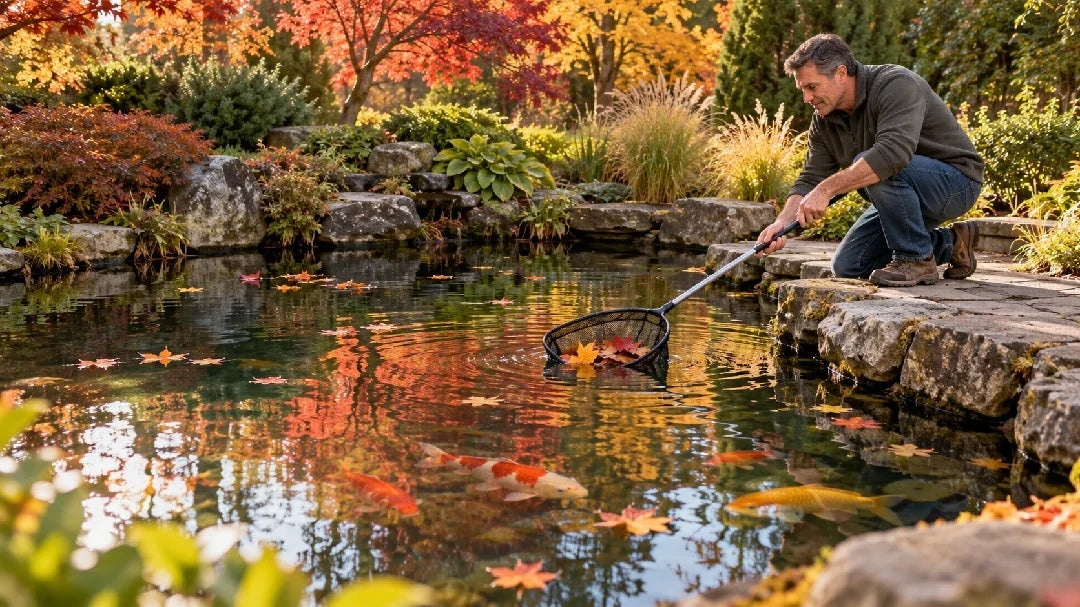
The arrival of fall often catches a pond unawares. In one week, fish are still swimming actively and plants are blooming. After a few weeks, there are leaves in the pond, and fish barely rush to the food bowl at the feeding time. This is when some maintenance would go a long way. Fall maintenance of a pond involves the removal of dead matter from the pond and preparation of fish, plants, and equipment for the colder months. No need to rebuild or thoroughly clean the pond at that time. The list of tasks is not that extensive and it is best done ahead of time.
When Should You Prepare Your Pond for Fall?
Start the preparation of your pond once the weather turns cooler, leaves start falling and the pond water begins cooling down.

First day of fall 2026
If you are looking for the first day of fall 2026, then according to astronomy, the autumn season of 2026 starts with the September equinox on September 22, 2026.
However, when it comes to pond care, that date is just a reference point.
Trees may start shedding leaves earlier than that. September can still be very much a summer month where you live. Pay attention to what's happening in the natural world and not rely on a specific date.
Once leaves start accumulating in the pond, it is high time to start with autumn maintenance.
Changes in temperature
A cold morning is a great indicator to check the temperature of the water in the pond.
In the fall, the temperature of air may change drastically during the day. However, the pond water temperature changes much slower. And this water temperature is important for your koi and goldfish because those fish are cold-blooded animals.
As the water temperature drops, they become less active and their digestion slows down.
Do not try guessing the temperature based on how warm the day is. With the help of an inexpensive pond thermometer, this process becomes much easier.
Also, it will give you an understanding of when it is time to start feeding your fish less often and when winter preparations should take place.
Early signs of autumn needs of the pond
Autumn pond usually gives enough advance warning about its needs.
Water lilies' leaves may start changing color to yellow. Some plants may droop and die back. Fish become less active in the water and spend more time at the bottom. Fallen leaves gather around the rocks and near the intake of the pump.
You may notice that the filter needs cleaning more often.
Address these issues promptly.
Five minutes spent with a net today will save a lot of effort of pulling the layer of wet and partially rotten leaves from the pond a month later.
Fall Pond Maintenance Checklist
The list of fall maintenance tasks for your pond can stay relatively short: leaves and other debris removal, equipment inspection, and water quality testing.

Remove leaves and debris
Leaves are likely the biggest task during the fall season.
Use a skimmer net to catch them while they are still floating. If your pond is situated under large trees, using a pond net over the water during the peak of leaves falling can save a lot of labor.
Don't bother to remove single leaves.
The problem is with accumulation. Once there is a pile of them, the removal becomes much harder. Eventually, these leaves will decompose and will contribute to the organic waste in the pond.
Check areas around the plant pots and rocks as well. They are great places to hide soggy leaves.
If there is sludge accumulated on the bottom of the pond, remove the areas with the highest concentration of it without disturbing everything else.
Check pumps and filters
Fall is the best time to do an adequate inspection of the equipment.
First, check the flow of the water. Does it seem to be weaker than it was earlier in the season?
The intake of the pump may get clogged quite quickly with fallen leaves and other debris. Filters may also require more frequent cleaning as the plants die back.
Turn off the power of any electrical equipment before starting to work with it. Remove visible debris and check the tubing for any kinks, leaks or broken connections.
There is no need to clean everything to perfection. You just want the equipment to be in good condition before the winter season starts.
Test water quality
Your pond water may look crystal clear but still, there might be some problems with water quality.
In case of ponds with fish, test the basic indicators such as pH, ammonia, and nitrites. This is especially helpful after heavy rains, after pond cleaning, or after a period of intense leaf falling.
Check the water level as well.
The slight drop is usual. The water level that keeps dropping fast requires your closer attention. It may indicate the leakage in a hose or somewhere else and it is much easier to repair that during a mild autumn afternoon rather than during a cold winter.
How to Care for Fish and Pond Plants in Autumn
As the water becomes colder, start feeding fish less often and remove the dead growth of plants.
Fall feeding of koi and goldfish
This is one of the cases when less is more.
During the fall, koi and goldfish do not require the same amount of food as they did during summer. As the water becomes colder, their metabolism slows down.
Use the water temperature to guide you and follow the instructions on your fish food.
However, pay attention to the behavior of the fish.
If they come over slowly, eat a couple of bites and show no further interest in food, do not throw the pellets into the pond. This food won't disappear. It will sink, will get softened and will become one more thing for the filter to deal with.
Can you plant pond plants in autumn?
Yes, you can plant pond plants in autumn, but it is not the best time of year for every plant or climate.
Hardy pond plant may grow and root successfully during a mild fall. Tropical plant planted shortly before the first frost will have a much more difficult task.
Before purchasing a plant, check the hardiness of the plant and the winter temperatures in your region.
There is nothing wrong with waiting until spring.
If you are already busy with fish and equipment preparations for winter, it is much easier to postpone this non-essential project.
Dead plant growth removal
You don't have to cut every plant down as soon as September comes.
Start with obviously dying plants.
Remove yellow, brown or collapsed leaves before they start rotting in the water. Cut off dead stems and remove the plant material from the pond instead of letting it float.
Each plant has different winter care needs. Hardy water lilies may survive in winter outdoors if positioned correctly. Tropical plants may require to be taken indoors.
Handle each plant individually instead of giving the whole pond one big trim.

How to Prepare Pond Equipment for Cold Weather
Winter preparation of the equipment depends on the region where you live, the depth of the pond, and the equipment used.
Pump and filter care
Should the pump run during winter?
There is no universal answer.
Some equipment is intended to operate during winter. Others may need to be drained and stored during the winter season. The best way to find out is to check the manufacturer's instructions for your equipment.
If you decided to keep the pump on, clean the intake and check the flow. If the pump is going to be kept off during winter, clean it before storing it.
Whatever your decision is, do not let water accumulate in the equipment that will be exposed to the cold and can freeze and crack.
Aeration and water movement
Fish need suitable environment during winter.
Aeration (air movement in water) can help to provide proper gas exchange. However, winter aeration can be a bit different from the summer aeration.
In a deep pond, fish can stay closer to the bottom of the pond where the conditions are more stable. Intense water movement in the area where they stay can disturb the conditions.
Therefore, in winter aeration air stones are often positioned higher than in the deepest point of the pond. The optimal position still depends on pond depth and climate.
Ice-related problems prevention
The presence of ice on the surface is not necessarily an emergency situation.
The more important thing for the fish pond in a cold climate is to maintain a proper gas exchange and not to try to keep the whole surface of the water thawed.
A pond de-icer or an adequately positioned aeration system may help to maintain a water hole during winter if necessary.
Do not hit the ice with a hammer. Apart from being unnecessary, such treatment can disturb the fish beneath.
Prepare before the first frost comes. Check exposed plumbing, clean the equipment, and decide how you will handle the pond during the winter.

Make Fall Pond Care Simple and Consistent
A healthy pond does not require any dramatic cleaning at the end of the season.
Start with leaves. Prevent the dead plants from falling into the water, reduce feeding as the water cools down, and check the pump and filter before winter. Then prepare the equipment for winter in accordance with the climate of your area.
Small regular tasks are easier to do than sudden cleaning in cold weather.
Simple equipment can help with that as well. Poposoap pumps, filters, and aerators are great pond equipment for those who prefer simplicity in water movement and maintenance. However, the equipment is most effective when accompanied by one more simple thing – regular inspections of the pond.
A few minutes invested in it today can prevent a cold and messy job later.

8W Solar Power Pond Aerator With 4400mAh Battery
24/7 Oxygen Supply with 4400mAh Battery, 2 Working Modes & 9 Adjustable Airflow. Helping to oxygenate pond water for fish in autumn
Shop NowFAQ
When should I start fall pond maintenance?
You should start it when leaves start falling and the water in the pond starts cooling down. You do not have to wait for the first day of fall.
Should I clean my pond completely before winter?
No. Remove excess leaves, sludge, and dead plants, but do not disturb the pond unnaturally.
Can I leave my pond pump running in winter?
Sometimes. It depends on the pump, design of the pond, and the climate of your area. Follow the manufacturer's winter instructions for your equipment and protect the equipment from freezing.
Should I feed koi during fall?
Yes, as long as the water temperature is suitable. Reduce feeding as the water becomes colder and follow the recommendations of the manufacturer of the fish food

Leave a comment
All comments are moderated before being published.
This site is protected by hCaptcha and the hCaptcha Privacy Policy and Terms of Service apply.