


The presence of algae in the winter pond can be surprising since garden plants enter their dormancy period, but still, some green growth can occur. This happens due to the capability of some species to endure low water temperatures and use the light and nutrients available in winter time. The winter time generally decreases algae growth, but does not stop it completely. Knowing this fact helps to make winter pond management easier.
Can Algae Grow in Cold Water?
Yes, some algae can live and grow in the cold water. However, they grow slower than in the warm water.

Cold-tolerant algae
So, does algae grow in cold water? Yes. There are some species that can tolerate low temperatures very well.
There are many types of algae. Some of them remain active when aquatic plants enter their dormancy period. Thus, the cold weather does not mean that there will be no algae in a pond.
Light and nutrients in winter
Despite the fact that the light and nutrients are limited in winter time, algae still require them for its development.
Winter time has shorter days, but the sunlight still can reach the pond. The nutrients can be provided by fish waste, fallen leaves and dead plants.
If both factors are present in winter time, some species of algae may continue developing.
Slow but stable growth
How quickly does algae grow in winter time? Generally, the speed of its growth is lower than during the warm months.
However, some quantity of algae can gradually increase and cover rocks, liners, shallow areas or something else.
Temperature influences the speed of algae growth, but it is not the only factor that should be considered.
Why Does Algae Grow When Other Plants Are Dormant?
Some types of algae are capable of continuing their growth because of the presence of cold-tolerant algae and lack of plant competition in the pond.

Less plant competition
During the warm months, the healthy aquatic plants consume nutrients from the water.
In the winter time, many of them slow down. As a result, they use fewer nutrients, and some of the nutrients are left in the water. Some species of algae can benefit from such situation.
Available nutrients
Organic material can continue decomposition during winter months.
Dead leaves, old plant material, fish waste and leftover food can provide nutrients for the algae.
This is why fall pond cleanup is important.
Clearer water in winter and sunlight
In winter time, the water in the pond can become clearer.
Due to this fact, the sunlight can reach rocks, pond liners and other areas underwater. Algae growing in such places can receive the necessary light.
A few sunny winter days can be enough for algae to continue its growth.
What Is Algae in Snow?
The algae in the snow is the group of cold-tolerant algae that can survive and develop in snowy environment.

Cold-tolerant algae
Some species of algae are specially adapted to the very low temperature.
They can remain active in the snow and ice when other plants would not survive in these conditions. It is a good example of how differently algae react to the low temperature.
Why snow can be colored
Snow algae can sometimes give the snow a pink, red, orange or green color.
Such colors are created by some pigments (natural substances that produce color) in the algae. One of the most famous examples is "watermelon snow".
Difference from pond algae
Algae in snow are not the same as usual algae that grow in the backyard pond.
The organisms and environments are different. Algae in snow only shows that the low temperature does not necessarily mean that there will be no algae.
The algae in the pond should be managed depending on the conditions in the pond.
How to Limit Winter Algae Problems
Decreasing of the winter algae growth can be achieved by removing excess organic material and limiting nutrients in the pond.

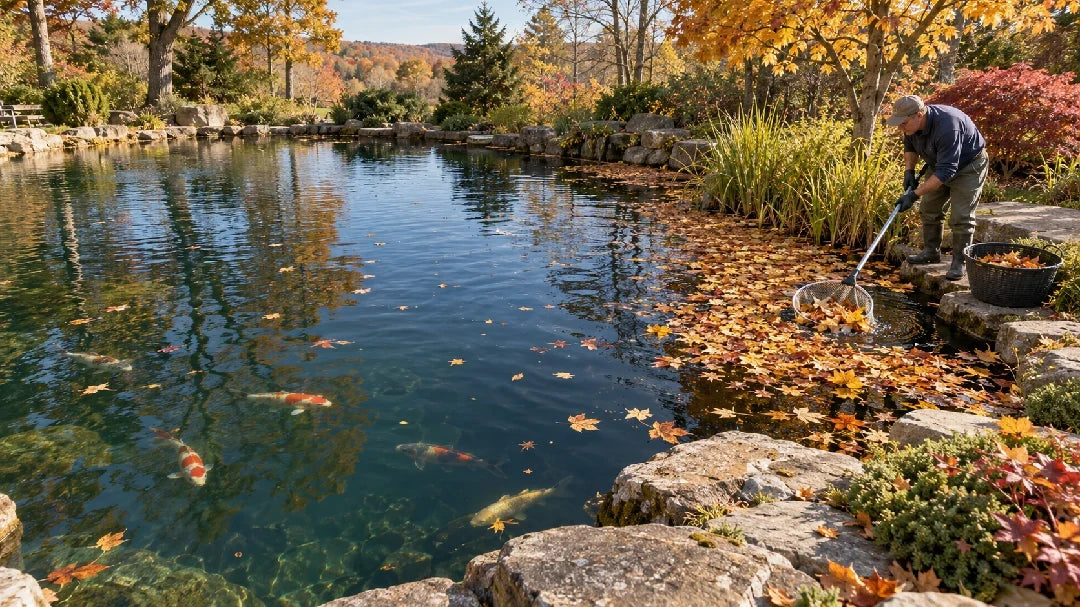
Remove fall debris
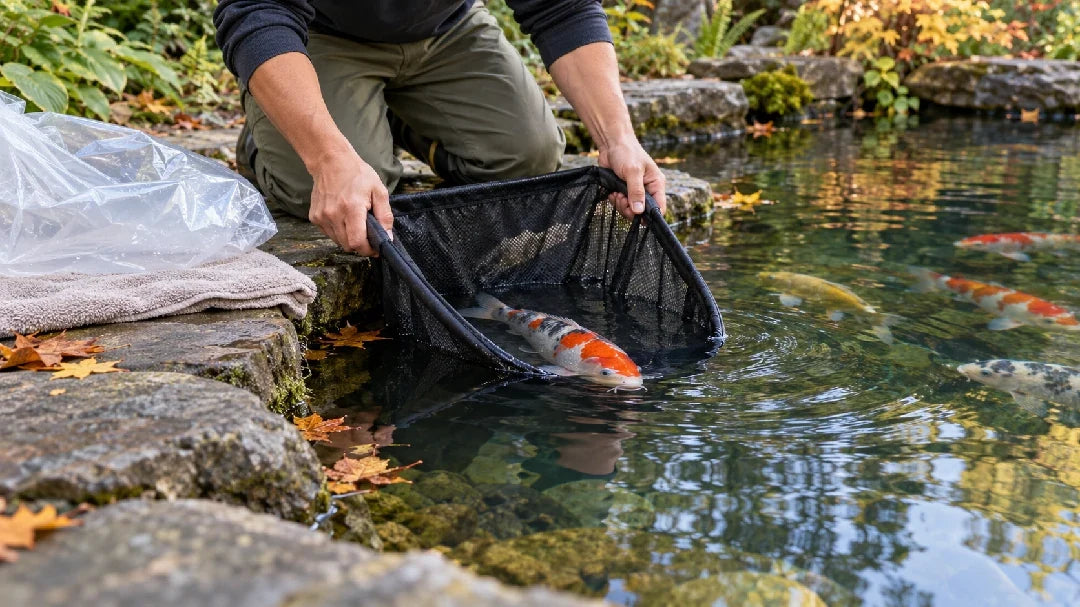
Leaves should be removed before they sink to the bottom of the pond.
Dead plant material should be cut off, and pond net or skimmer can be used to remove floating debris.
Fall cleanup of the pond can help to reduce organic material left in the pond in winter time.
Reduction of the nutrients buildup
Extra fish food or decaying material should not be left in the water.
Decomposition of organic matter leads to the release of nutrients that can be used by algae. Fish should be fed seasonally and waste should be removed when possible.
Cleaner pond gives less resources to algae.
Maintain safe winter aeration
Winter aeration can promote the process of gas exchange (exchange of gases between water and air).
However, the winter aeration may require different settings than summer aeration, especially in the regions where freezing is common.
Consider following instructions for your equipment and depth of the pond, number of fishes and weather in winter.
Do Not Ignore Algae Just Because It Is Winter
The cold weather does not mean that algae disappears.
Some species of algae can survive and grow slowly while other plants are dormant. Light, nutrients and lack of plants in the pond can help algae to grow.
The simplest solution is removal of fall debris, decrease of the nutrients and maintenance of the pond in winter season. Proper aeration of water can also improve the conditions in the pond.
If it works for your pond and weather conditions, easy-to-use POPOSOAP pond equipment can be a part of your pond maintenance routine. Winter can be quiet, but your pond still has its activity under the surface.

20W Solar Pond Filter & Fountain Kit
Built-in 280 GPH pump, filter box + bio media, helping to maintain water circulation and improve water quality in your pond—all with zero electricity costs during the winter.
Shop NowFAQ
Does algae grow in cold water?
Yes. Some algae can survive and grow in cold water, though the speed of its growth is generally slower.
How fast does algae grow in winter?
It depends on many factors including temperature, sunlight, nutrients and type of algae.
Is algae in snow the same as pond algae?
No. The snow algae is adapted to snowy environment and differs from the usual algae in backyard pond.
Should I remove winter pond algae?
Not always. Small amounts can be normal. Firstly, manage the debris, excess nutrients and other conditions in the pond.

Leave a comment
All comments are moderated before being published.
This site is protected by hCaptcha and the hCaptcha Privacy Policy and Terms of Service apply.